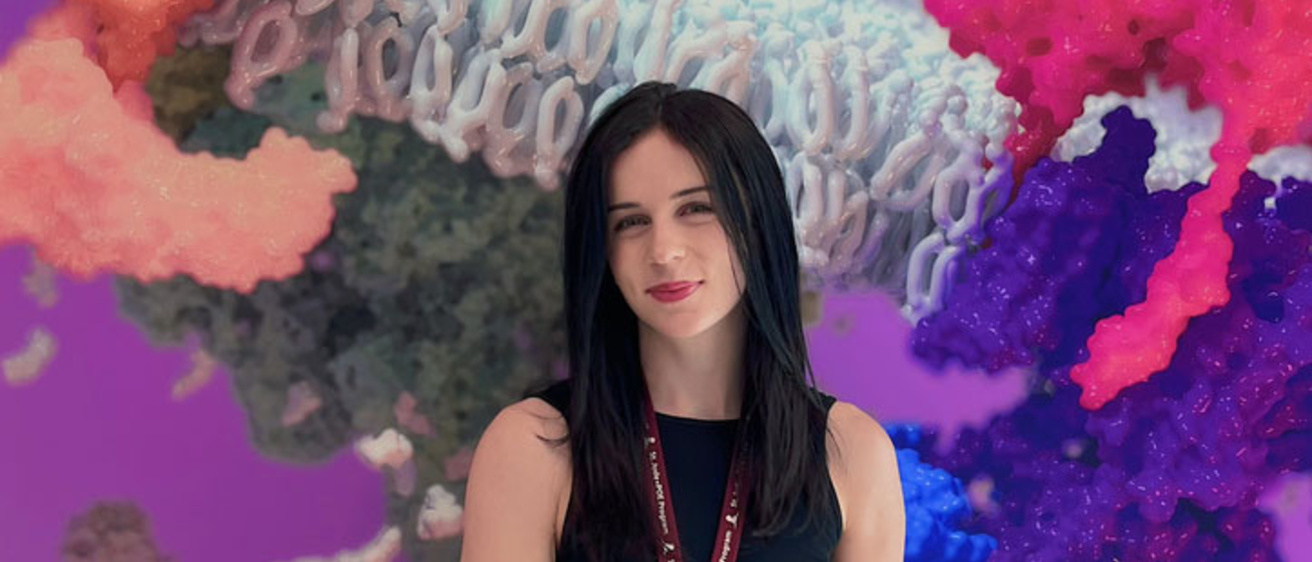
Liz Elias
Major(s): 4th Year - Computer Science BA & Microbiology BS
Intern for St. Jude's Pediatric Oncology Education (POE) Program
What did a typical day look like as a Computational Intern for St. Jude's Pediatric Oncology Education (POE) program?
I usually started my day by blocking out 3-4 hours in the morning to really focus on the programming component of my project. My mentor, Dr. Balint Meszaros, was less of a morning person than I was, so I generally had some time alone in the mornings. We usually met up after I grabbed lunch and went to the intern seminar with the other POE interns. We'd then discuss what I'd completed during the day and set up a plan for what I'd be doing next.
How did you seek and obtain this internship?
I'd had experience in both experimental and computational research when I applied but hadn't had a chance to work at the intersection of biomedical and computer science, which is what motivated me to look for an internship like this. One of my PIs at Iowa, Dr. Dawn Quelle, did her post-doc at St. Jude and so I just googled if St. Jude had a summer internship program which is where I found the POE program.
You mentioned you helped develop the project your internship focused on. Could you please elaborate on how you were able to do so?
During most REUs, undergrads will be given a branch of an already well-developed project to work on for the summer. All I got was an abstract. This meant I got to develop the project from the beginning and, with the help of Balint, developed the entire code base from start to finish and was making the decisions on what story we wanted to tell with this research.
What skills did you develop or enhance during your time as an intern?
I was able to develop a depth of knowledge regarding how computational tools and computer science theory can be used to advance our understanding of cancer biology and other genetic diseases. Also, because my lab had both wet and dry lab scientists, I was able to see how the data produced by computational scientists supports the dry lab scientists and vice versa. They're equally important to advancing cancer therapies and one cannot replace the other.
How do you expect this experience to help with your remaining semesters at Iowa?
This experience was a bunch of troubleshooting in python and working with a lot of large, complex datasets so I feel really prepared for my classes this semester that are using python. I also think that developing this project from the beginning gave me a lot of skills I can bring back to the research labs I'm a part of at Iowa.
What helpful tips do you have for current students seeking internships?
Start networking early and get to know faculty at Iowa working in the spaces you want to end up in. A highly personal letter of recommendation or the right connection can make a huge difference.
What was your favorite aspect of your internship?
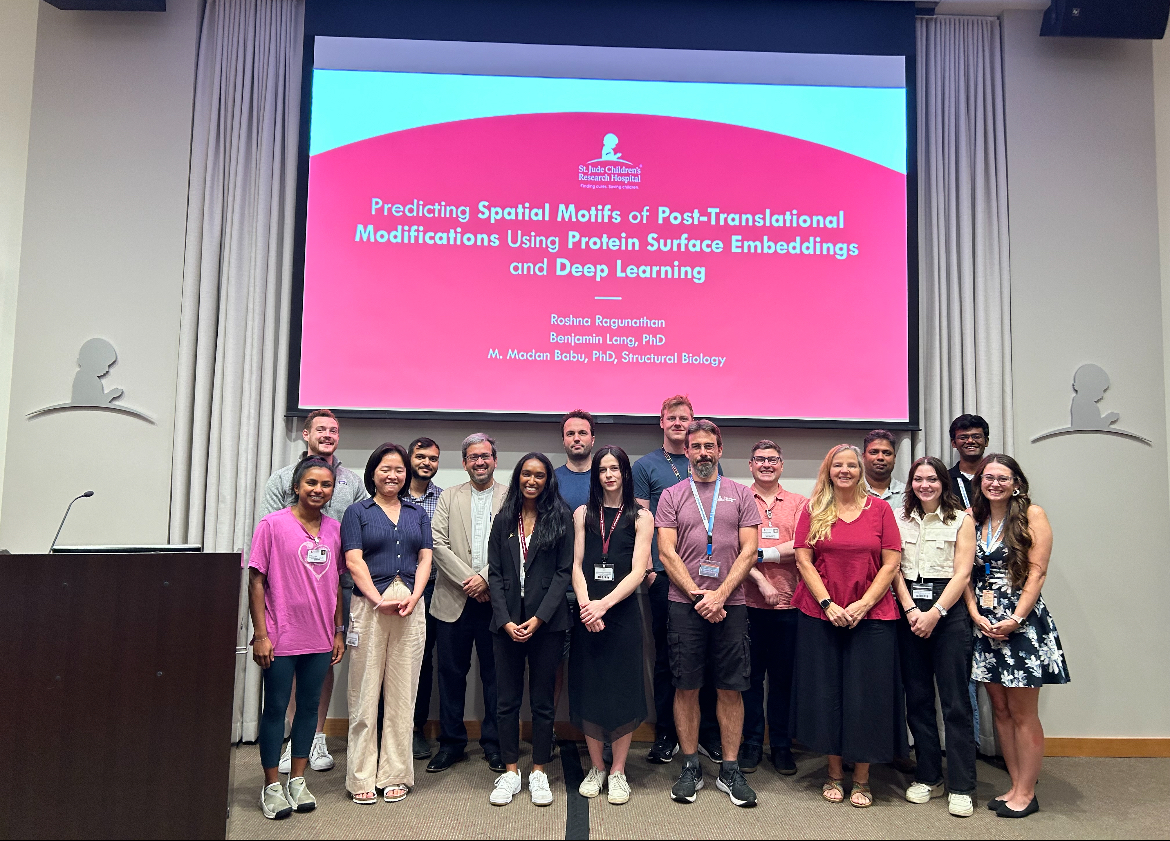
The people. Dr. Babu, (the PI), has brought in scientists from across the globe. Not only were they incredibly smart and accomplished, but welcoming and excited to be doing the research they are doing and mentoring younger scientists. Balint was also an incredibly mentor. He was always willing to explain any concepts I needed for the project that I hadn't worked with before and was super encouraging even when I ran into problems.
Can you see yourself in a future career with St. Jude’s Babu Lab?
Absolutely! My mentor and PI have already mentioned that they would be more than happy to bring me back to St. Jude if I decide to do another summer with the POE program. I'm also continuing this project remotely so we can turn it into a publication, so I still haven't left yet even though I'm no longer in Memphis. St. Jude as an institution is truly inspiring as well and I'm so grateful I was able to contribute a small amount to developing better treatments for children with cancer.