Earn your BA in Informatics
When you earn your BA in Informatics at Iowa, you can choose to integrate coursework in one of 10 or more additional disciplines we call cognates.
Your work in Informatics will give you a basic grounding in computer science and a thorough understanding of information processing tools and constructs. You'll gain a user-centric perspective on computing tools, and how to apply computing tools to problem solving
The application of Informatics rarely happens in a vacuum. That's why you'll gain a thorough understanding of a chosen cognate area so you can apply and integrate what you're learning in a realistic way. This is how our grads prepare to be part of dynamic teams in a variety of career fields.
What is a COGNATE?
['käg,-nāt] — A cognate is a coherent set of courses in a discipline or interdisciplinary grouping aimed at enhancing career-oriented skills.
Integrate your Informatics learning with courses in our cognate choices
- Art
- Economics
- Geoinformatics
- Health Informatics
- Human-Computer Interaction
- Linguistics
- Media
- Music
- Social Informatics
- Theater
- Or an individualized Cognate that you design with your advisor
More about the BA in Informatics
Degree requirements
The Bachelor of Arts with a major in informatics requires a minimum of 120 semester hours, including at least 43-51 semester hours of work for the major. Students must maintain a GPA of at least 2.00 in all courses for the major and in all UI courses for the major. A cumulative GPA of at least 2.00 is required for graduation. Students also must complete the College of Liberal Arts and Sciences GE CLAS Core.
The program combines foundational informatics coursework with coursework in a cognate area. The major offers the cognate areas of art, economics, geoinformatics, health informatics, human-computer interaction, linguistics, media, music, social informatics, and individualized cognates. Required credit for the major depends on a student's choice of cognate area.
Coursework for the major includes the informatics core, one elective, a statistics course, and a set of courses in a chosen cognate area. Work for the major may not be taken pass/nonpass. Students are expected to have taken MATH:1005 College Algebra or the equivalent.
Students who major in informatics may not also major in computer science, business analytics and information systems, or computer science and engineering. They may, however, earn a minor in computer science.
Listed below are the general categories of coursework required to earn the degree; for more specific information on courses, curriculum, and requirements of the Bachelor of Arts in informatics, visit the UI General Catalog.
| Title | Hours |
|---|---|
| Informatics Core Courses | 19 |
| Informatics Electives | 3 |
| Statistics Course | 3-4 |
| Cognate Courses | 18-25 |
| Total Hours | 43-51 |
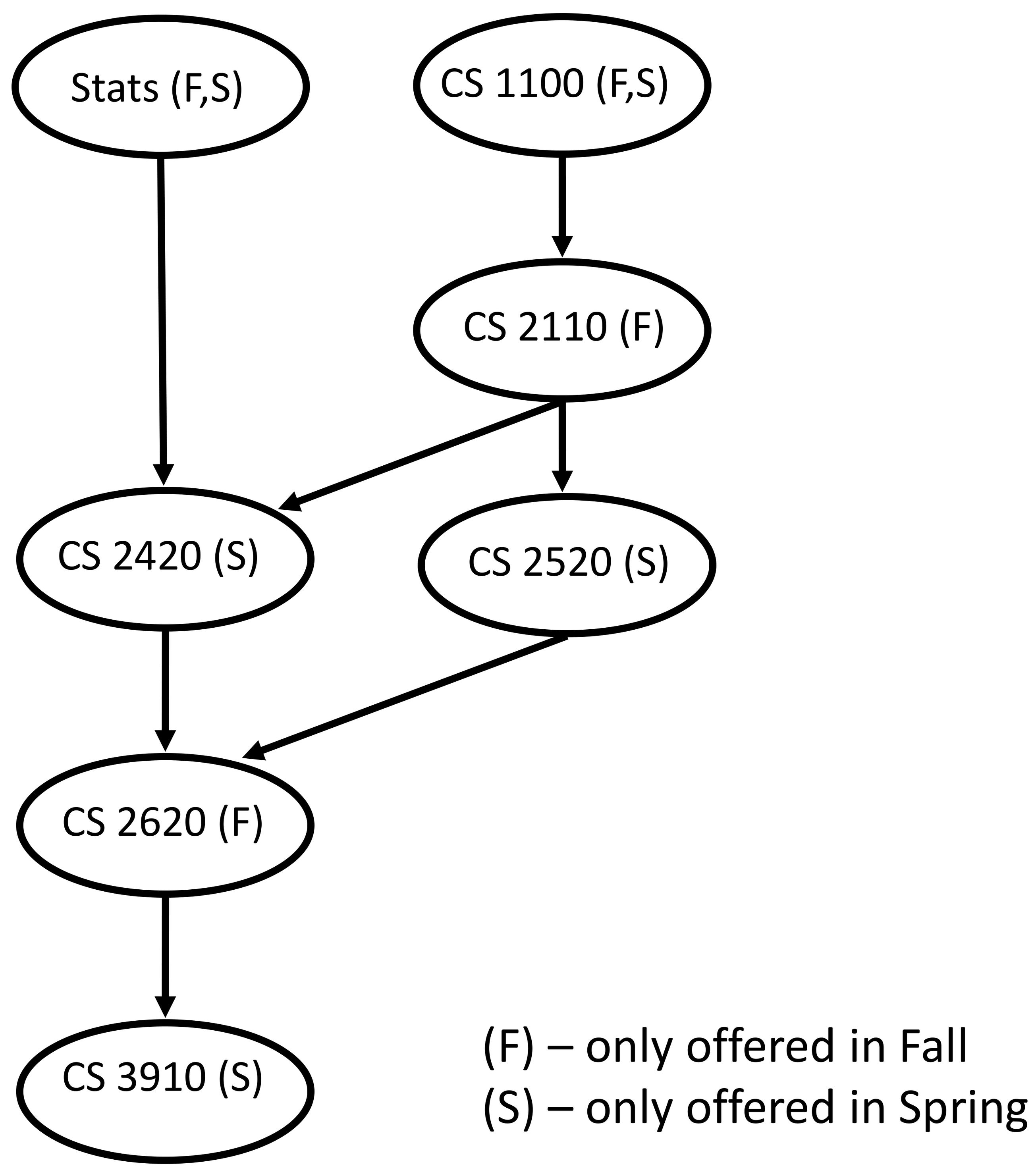
Core course structure
Cognate requirements
Students must complete all requirements listed under one of the cognate areas: art, economics, geoinformatics, health informatics, human-computer interaction, linguistics, media, music, social informatics, or an individualized cognate. Available courses and additional requirements can be found in the UI General Catalog.
Early admission to the Graduate College
Undergraduate informatics students who have 6 semester hours or less to earn toward graduation may apply for early admission to the Graduate College. Early admission allows students in their final undergraduate semester to take courses for graduate credit in addition to the courses they need to complete their bachelor's degrees.
Create your academic path
You'll find degree overviews, requirements, course lists, academic plans, and more to help you plan your education and explore your possibilities.
Current course list
The MyUI Schedule displays registered courses for a particular session and is available to enrolled students. The list view includes course instructors, time and location, and features to drop courses or change sections.