PhD candidate Yafan Huang visited The International Conference for High Performance Computing, Networking, Storage, and Analysis in November 2025. This is his third time at the conference.
Huang was chosen to receive an award, the ACM-IEEE CS George Michael Memorial HPC Fellowship, for his novel developments in exascale computing. This field of computing involves handling the performance of supercomputers that operate on the scale of exaFLOPS (or 10^18 operations per second.)
Huang presented two papers at the conference. "GPU Lossy Compression for HPC Can Be Versatile and Ultra-Fast", which proposes the fastest compression rates for GPUs. And "lsCOMP: Efficient Light Source Compression", which handles large streams of information from various scientific scenarios that involve light sources.
What was your experience like in St. Louis?
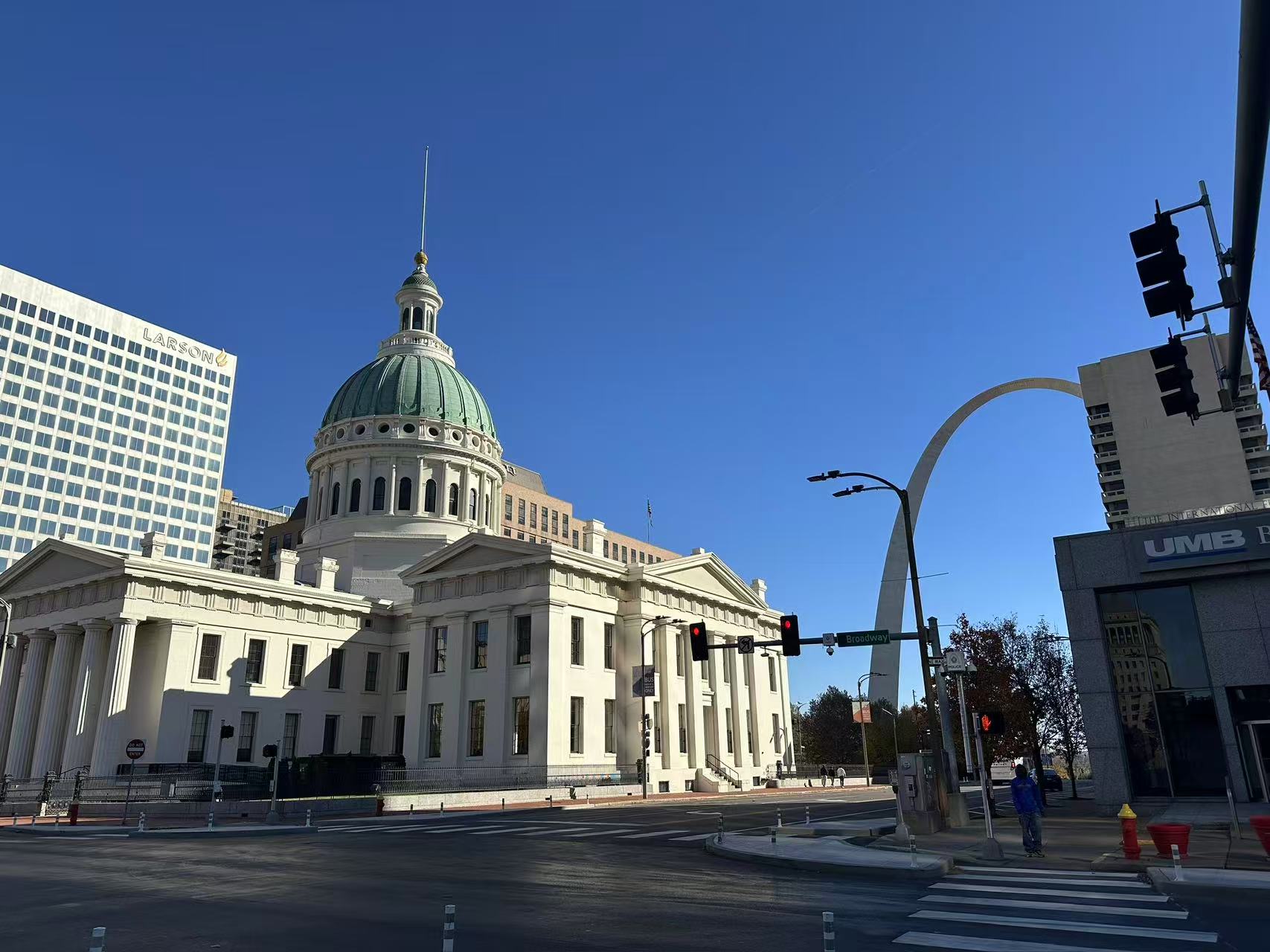
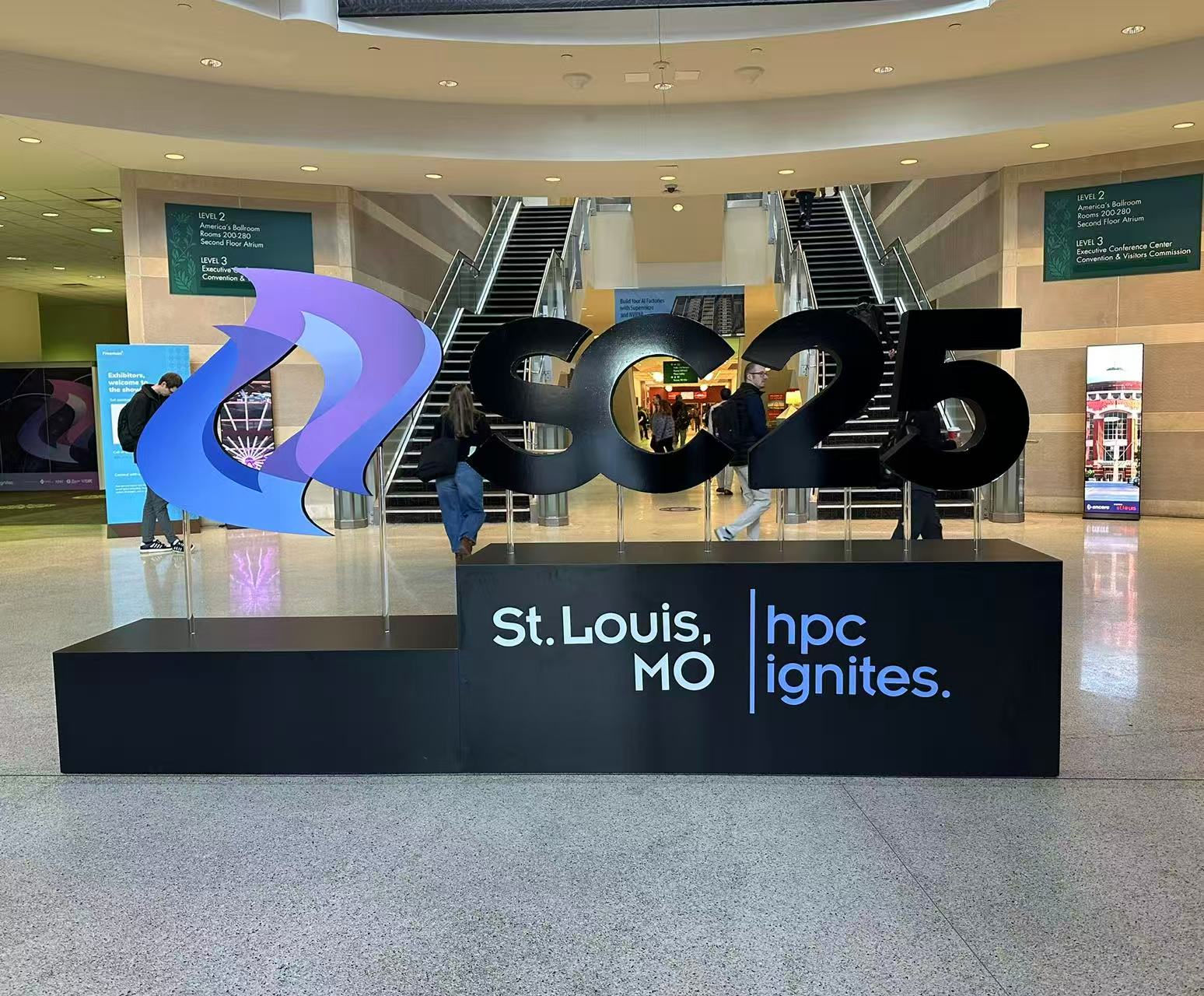
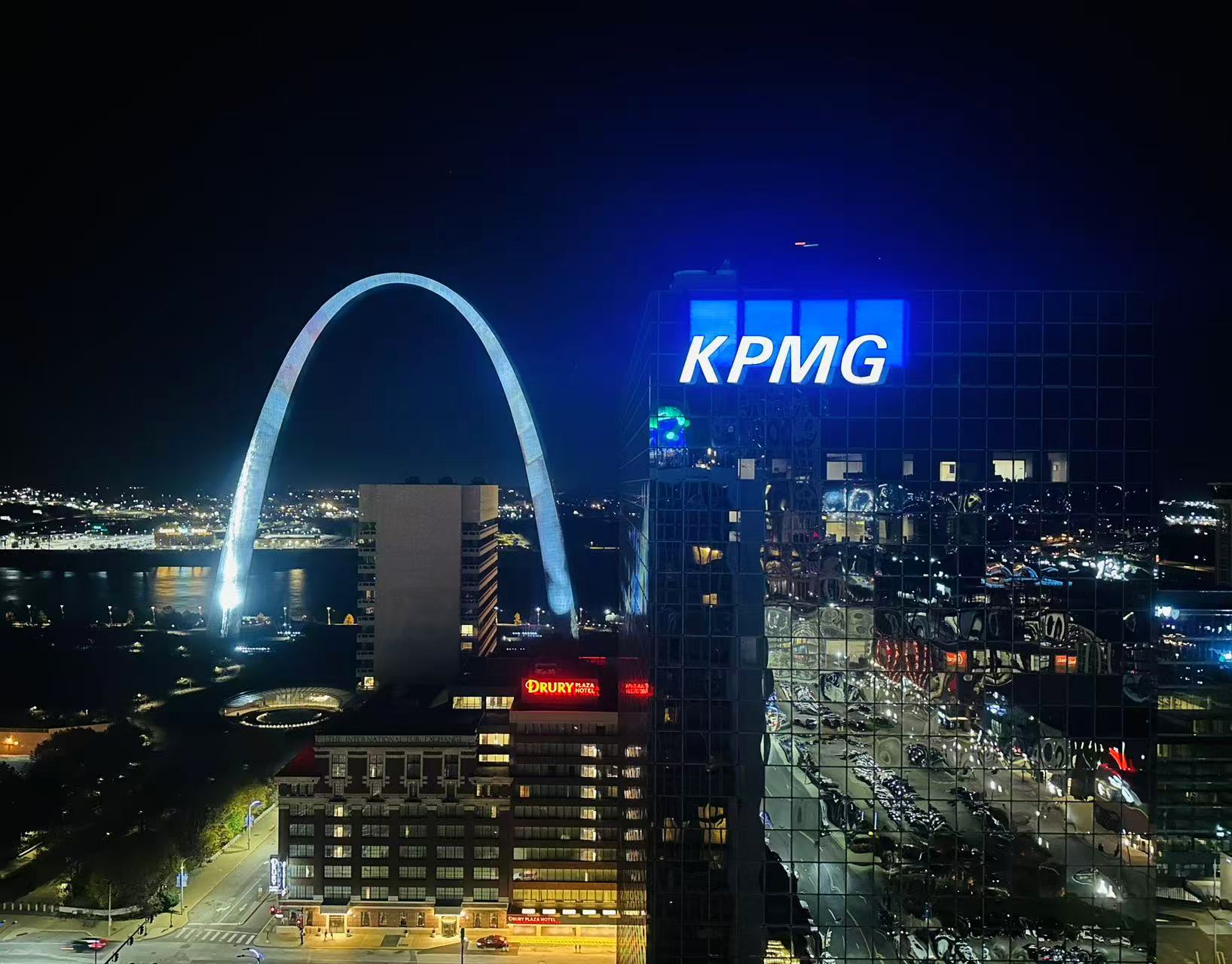
St. Louis is a wonderful city! The Gateway Arch is beautiful and near the Mississippi River. The city has lots of delicious food, and I enjoyed it a lot. I spent most of my time during the SC'25 at the America’s Center Convention Complex, which is a magnificent place within the St. Louis downtown area. SC is the biggest conference in computer system area and attracted 16,500 attendees this year. I met lots of excellent researchers and students from all over the world. Their intelligence deeply impresses and inspires me.
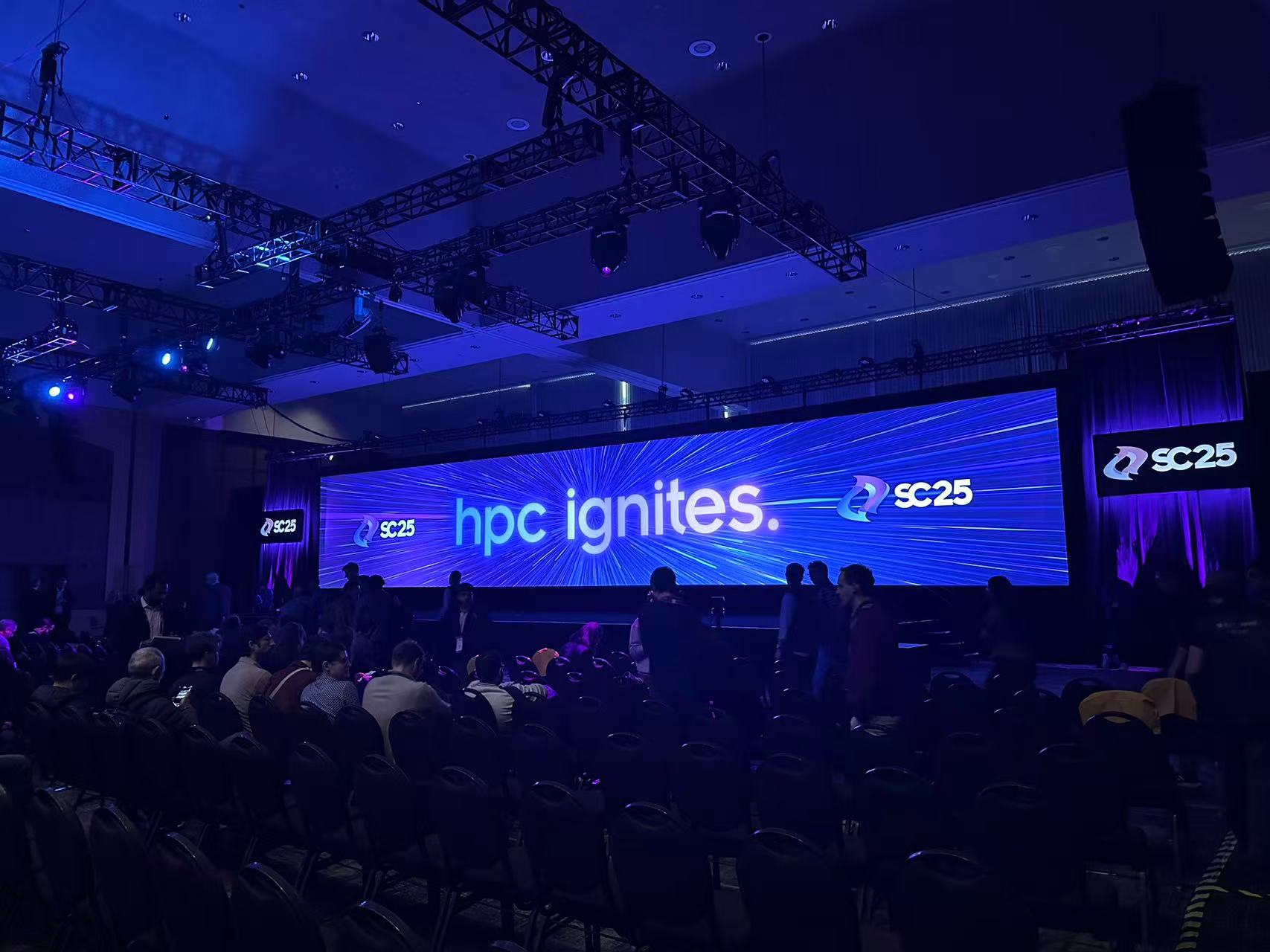
One interesting thing is that the CEO of NVIDIA, Jensen Huang, also participated in SC'25 and presented NVIDIA's product. But it was a pity that I was in another session in the conference and missed that.
What did you present at the conference?
I presented two first-author papers in the main proceedings of the SC'25 conference.
The first one is "GPU Lossy Compression for HPC Can Be Versatile and Ultra-fast". In this work, I propose VGC/cuSZp3, the fastest GPU error-bounded lossy compressor with high compression ratios. VGC/cuSZp3 supports several dimension-aware algorithms, memory-efficient compression, and selective decompression, making it a promising tool to mitigate big data issues in GPU.
The second paper is "lsCOMP: Efficient Light Source Compression". Existing light source facilities, such as APS from Argonne National Laboratory or LCLS from Stanford Linear Accelerator Center, produce massive data streams at a rapid speed. To reduce data stream intensity and benefit scientific discovery, I propose lsCOMP, a compressor supporting both lossless and tunable lossy compression, to reduce the size of data for diverse light source scenarios.
What workshops or events did you participate in?
Yes, besides the main proceedings, SC also has lots of workshops and poster sessions where people with the same research interests can gather together, present their works, and exchange ideas. I mainly attend two workshops.
The first one is "The 11th International Workshop on Data Analysis and Reduction for Big Scientific Data". This workshop introduces lots of interesting ideas and explores how big data can be managed to better satisfy scientific discovery. This is also where one of my research interests lie in.
The second one is "LLVM-HPC2025: The 11th Workshop on the LLVM Compiler Infrastructure in HPC". This workshop discusses how LLVM, a leading compiler infrastructure, can be used in high-performance computing research. Compiler is a bridge between software and hardware. Doing research in this area brings lots of opportunities and is very interesting!
I also attended the poster session a lot. In this session, different researchers and students can actively discuss and share research ideas. This is more like casual talk and discussions, which can always enlighten and inspire me with some new research ideas.
You won an award at the conference. What did the judges consider you for?
I luckily won the "ACM-IEEE CS George Michael Memorial HPC Fellowships" this year. This is a prestigious computer society recognition, and I couldn’t have gotten it without the generous past support from my advisor, Prof. Guanpeng Li, and my mentors, Dr. Sheng Di and Dr. Franck Cappello from Argonne National Laboratory.
Endowed in memory of George Michael, one of the founders of the SC Conference series, the ACM IEEE-CS George Michael Memorial Fellowships honor ~2 exceptional PhD students throughout the world whose research focus areas are in high performance computing, networking, storage, and large-scale data analysis. ACM, the IEEE Computer Society, and the SC Conference support this award.
I am recognized for advancing exascale high performance computing by creating ultra-fast lossy compression algorithms and versatile program-agnostic fault tolerance. More details can be found on this page.
What advice would you give to someone attending or presenting at the St. Louis conference in the future?
I would strongly encourage future attendees to explore beyond the main proceedings. While the technical paper sessions are extremely valuable, the poster sessions are equally important. Posters create a much more open and flexible environment for discussion. The conversations are less constrained than formal Q&A sessions after presentations, which allows for deeper, more spontaneous exchanges of ideas. I have found that some of the most interesting and inspiring discussions happen during poster sessions, and it is also a great way to build new connections and friendships within the community.
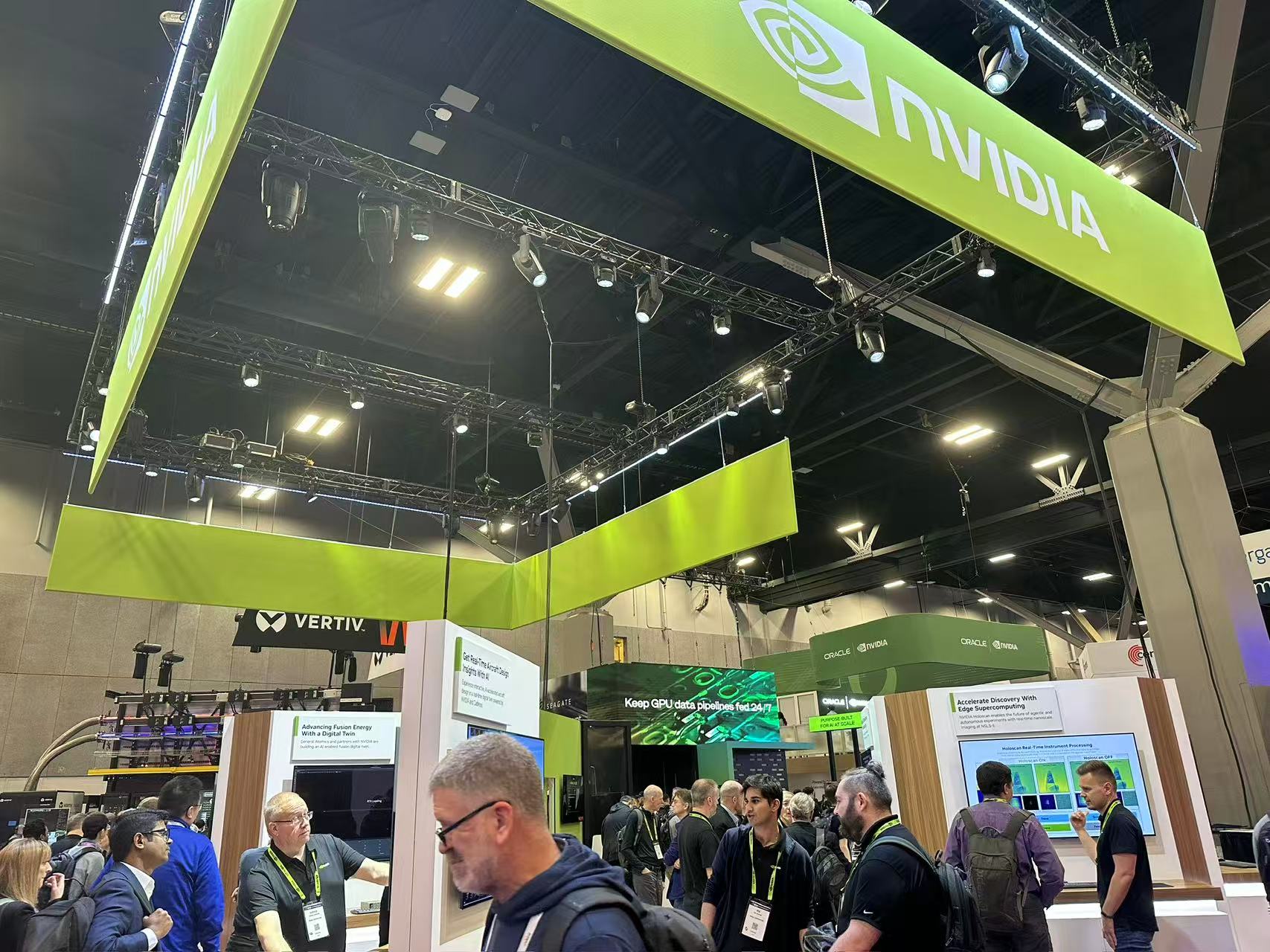
In addition, I highly recommend spending time at the industrial exhibition. Many leading technology companies showcase their latest innovations there. It is an excellent opportunity to see where industry is heading, from cutting-edge AI accelerators to specialized processors designed for extreme environments. These exhibits broaden your perspective and help you understand how research connects to real-world technological advances.
And of course, as a fun bonus, you might also come home with some memorable conference souvenirs.