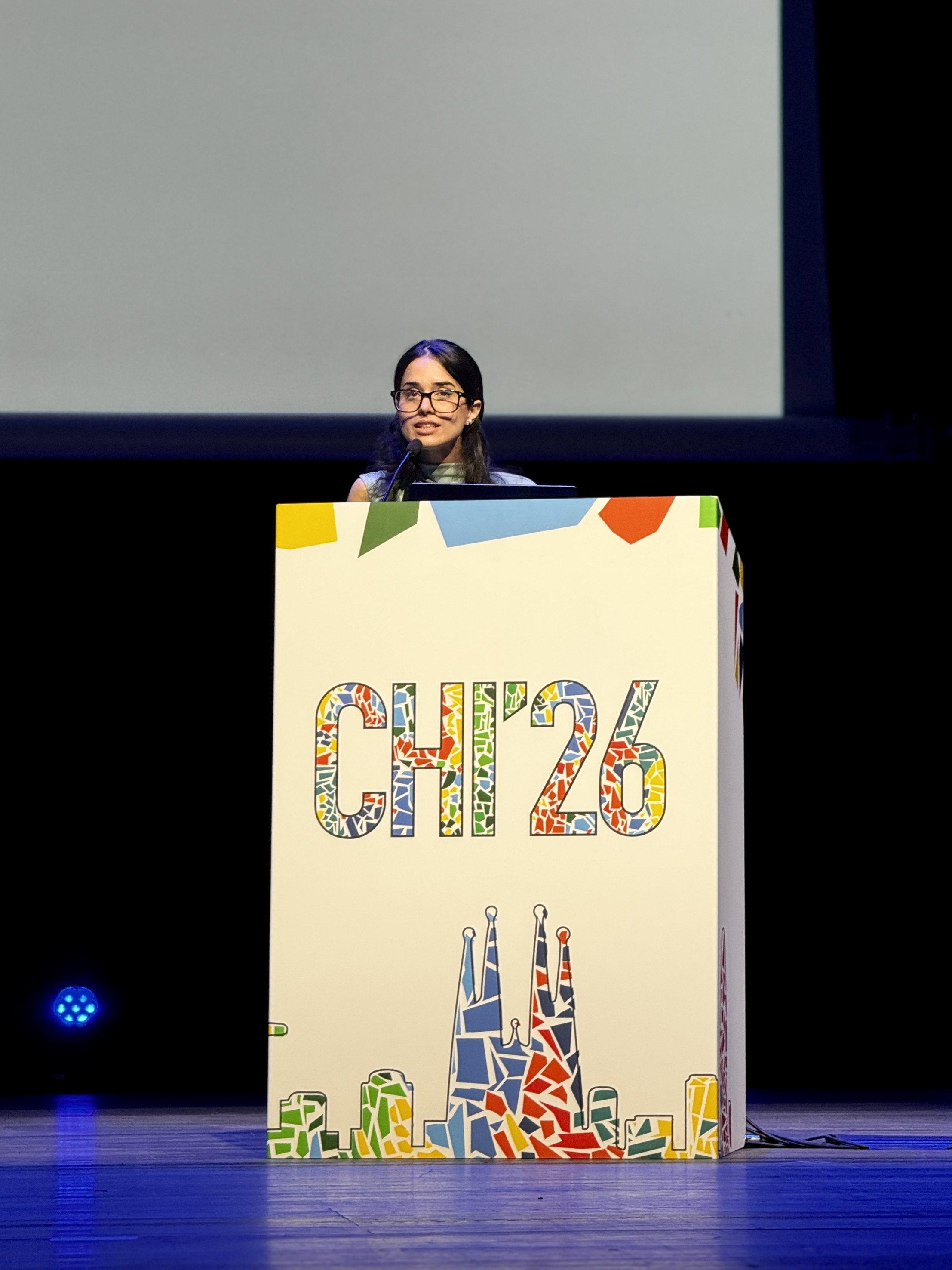
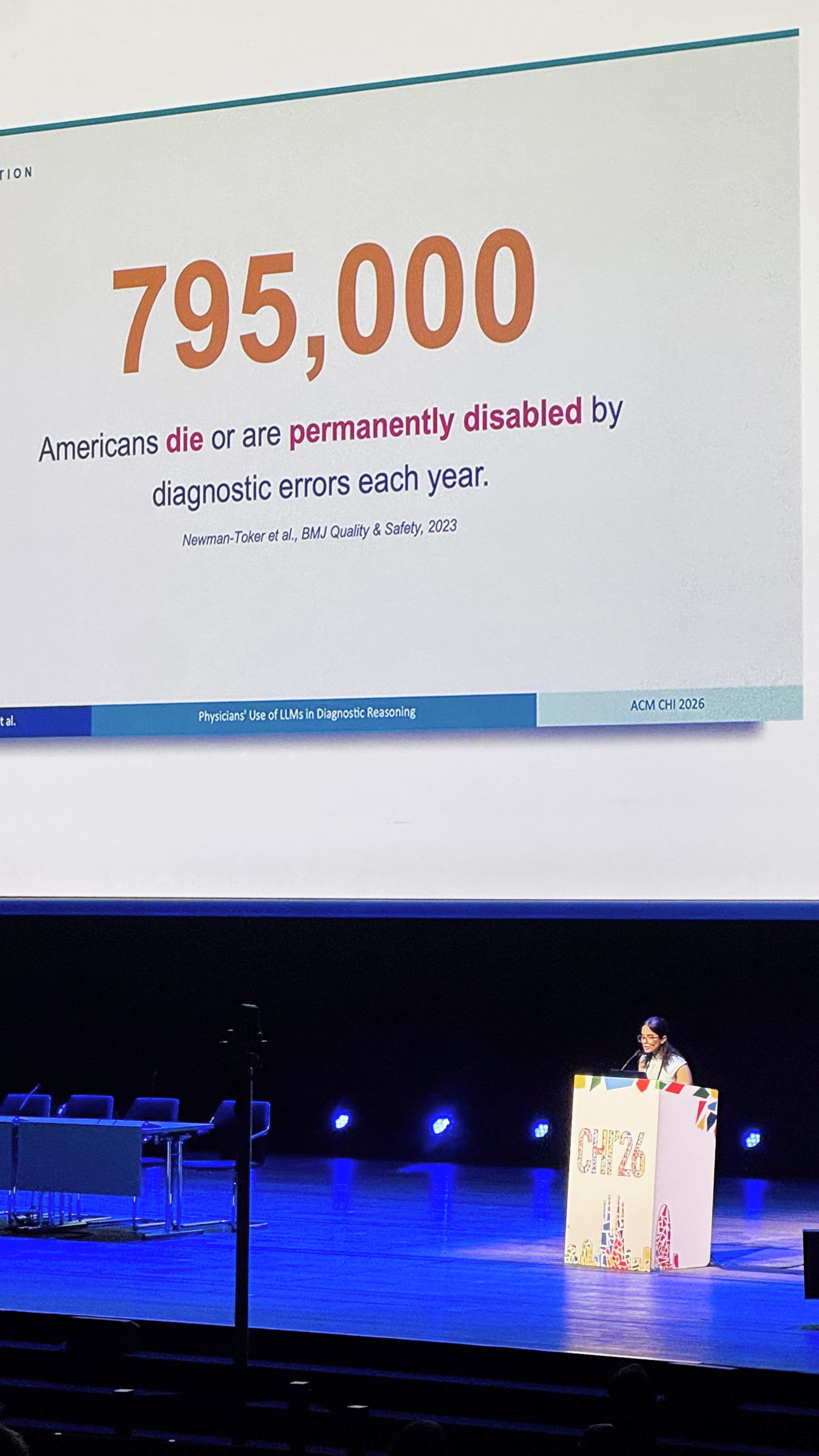
Ushna Malik, PhD candidate, presented at the Association for Computing Machinery (ACM) Computer-Human Interaction Conference in Barcelona.
She presented on her research paper titled “Prompting, Oversight, and Adoption: Physicians’ Use of Large Language Models for Diagnostic Reasoning in an LMIC.” The paper highlights the diverse prompting strategies from role assignment to cautious scaffolding, with consistent insistence on human oversight. Interviews reveal pragmatic enthusiasm for LLMs as a “second brain” in resource-constrained settings, tempered by skepticism about reliability, privacy, and patient trust.
"I’d also like to thank my advisor, Rishab Nithyanand, for supporting my travel to CHI and guiding me through the process, and the CS Department for helping make this opportunity possible." - Ushna Malik
What was your experience like at the 2026 Computer-Human Interaction Conference ?
Honestly, a little surreal. It was my first conference, and I wasn't prepared for how strange it would feel to see someone in person whose name I had only read in a bibliography. I was presenting work I'd started as an undergrad at the flagship venue in HCI, and it didn't fully sink in until I was actually standing in the room. I spent that first morning trying to be everywhere at once before accepting that CHI was too rich to be optimized. Every session I walked into made me wish I could clone myself for the one next door. Between the keynotes, papers, and demos, the sheer range of problems people are tackling in HCI was probably what hit me the hardest. It made the field feel much larger and more exciting than it ever does when you're just reading papers.
As you were a presenter, what did you present on?
Generative AI is racing into clinical workflows, but are doctors using it as a thinking partner, or quietly handing off the wheel? That's the question behind the work that I presented. There's very little evidence on what physicians actually do when they interact with these models, so we studied that: how they prompt, when they trust, when they push back, and how those patterns vary in ways that no one had documented before. Our findings suggest that clinical AI isn't just about smarter models. It's about designing interactions that help physicians stay in control. You can read the full paper here.
Was there a moment at the conference that stuck out to you the most?
The moments that stuck with me most weren't in the sessions. They were in the hallways, over dinners, and in accidental detours. I stopped at a poster because the title made me laugh, and it turned into a half-hour conversation with the author about how we'd run into the same problem from completely different directions. That was CHI in miniature. People were approachable, genuinely curious, and surprisingly open to collaborations. I came in thinking I was there mostly to listen, but I left realizing I had actually become part of the conversation.
What advice would you give to someone attending or presenting at the next conference?
My biggest advice is not to treat the conference like a checklist. Go to the talks but leave room for the parts that often matter most: coffee breaks, workshops, meetups, and conversations with authors. If there are papers you’re excited about, read them beforehand so you can ask meaningful questions; genuine curiosity is often what opens the door to collaboration. I’d also recommend attending community events, like award ceremonies, because they give you a rare chance to see pioneers in the field up close.
Finally, if you’re presenting, let yourself be creative. Be clear, but don’t feel locked into a standard format. Use the story, visual, demo, or example that best fits your work and gives the audience a reason to remember why it mattered.
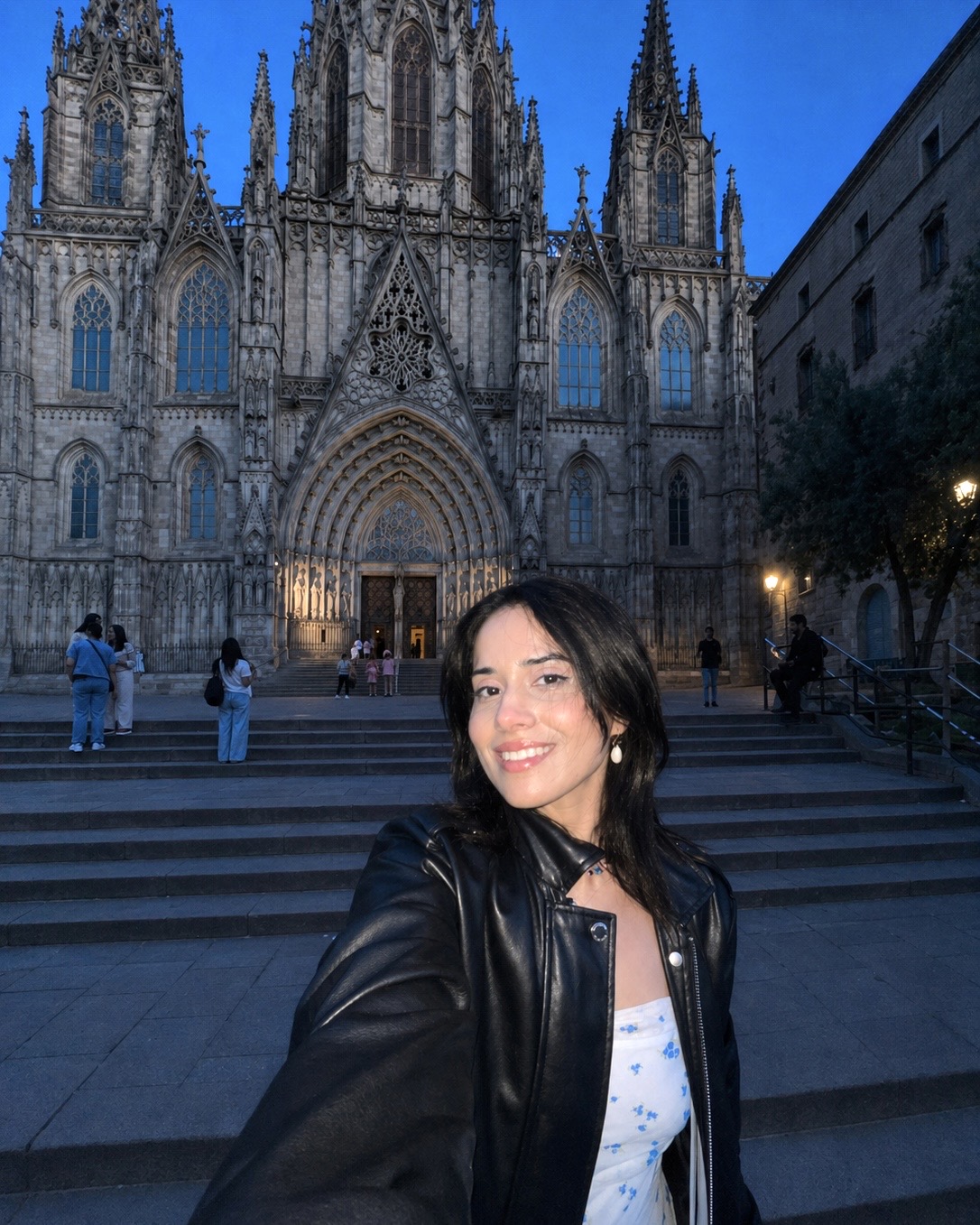
What was your experience like in Barcelona?
Barcelona set the bar unreasonably high for every future conference, which honestly feels a little unfair. It’s one of those cities where every neighborhood has its own rhythm, but you can move between them so easily that the whole place feels open to you. The Catalan food gave people one more reason to stay at the table; dinners went late, conversations went longer, and it never felt like the day had to end just because the sessions did. That’s what I’ll remember most: the way the city’s energy carried into the evenings and made the conference feel larger than the venue.
What's one thing you'd recommend to anyone traveling to Barcelona for the first time?
Skip the itinerary. I mean it. Barcelona is one of those rare cities where having no plan is the plan. You'll find better food, better views, and better stories by accident than anything you could have Googled in advance.