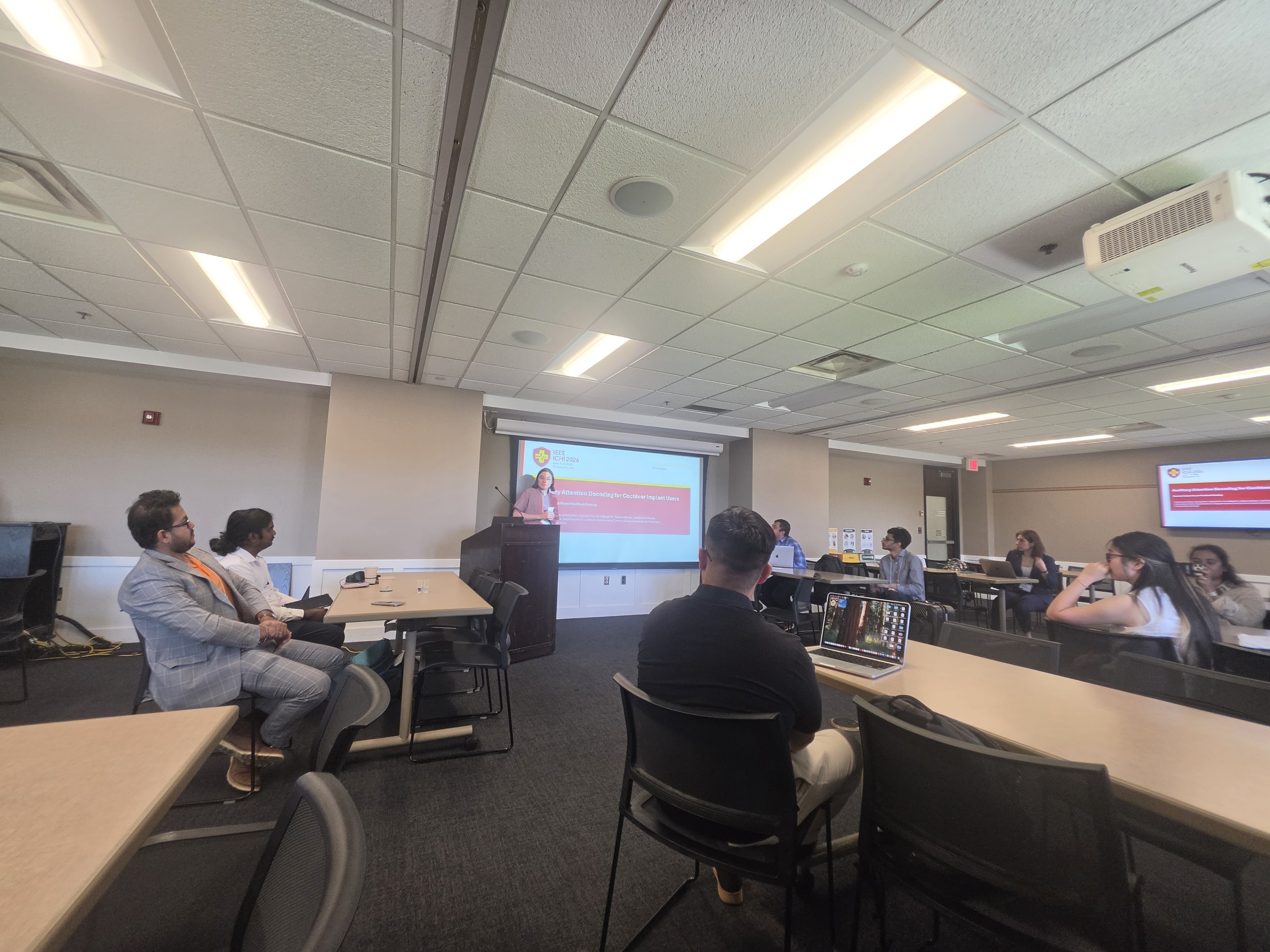
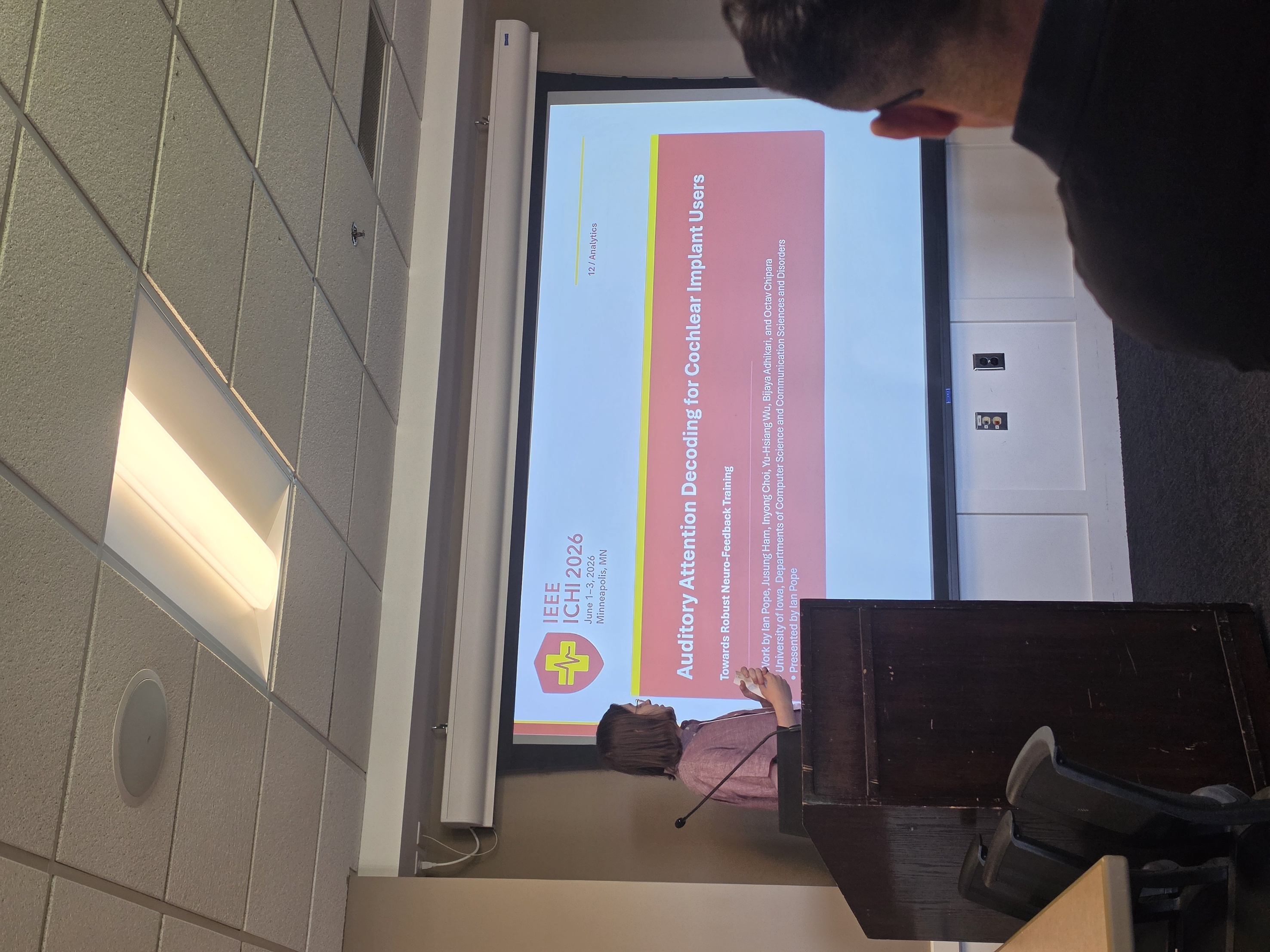
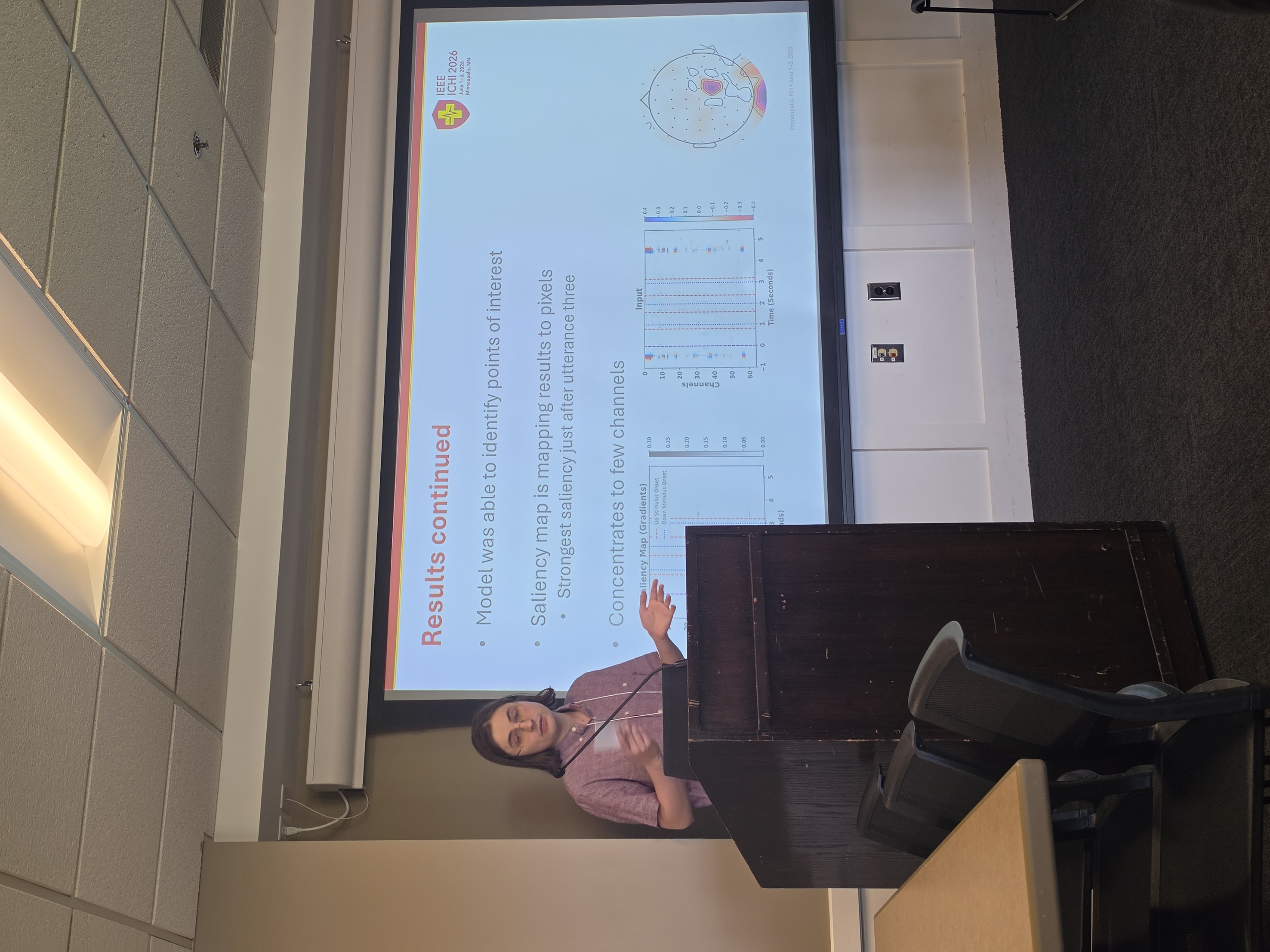
In June this year, Ian Pope, a UIowa PhD student in the Computer Science department, attended ICHI 2026. This was the 14th IEEE International Conference on Healthcare Informatics. The location of the Conference rotates each year: from Italy last year, to Minneapolis this year. Next year, the conference will be held in Washington, DC.
IEEE, the Institute of Electrical and Electronics Engineers, is an American organization with global reach in fields related to electrical engineering. IEEE has coordinated specialized publications, technical societies, and networking conferences since 1963. Now, one of their endeavors is ICHI, a conference where computer scientists, data scientists, and communication scientists apply technology and informatics to healthcare and wellness concerns.
ICHI was Pope’s first conference.
What is Healthcare Informatics?
Healthcare informatics applies algorithms, data, and computer systems to improve healthcare outcomes, research, and devices. The healthcare field of informatics has many sub-areas, such as data-driven development for clinical drugs and the study of modeling how diseases spread—also known as computational epidemiology.
The field also includes my area of specialty: integrated devices. (This area covers the exchange of information between medical hardware and medical software. For example, how to exchange real-time data between a heart monitor and a hospital's support platform. Successful implementation improves data accuracy and, as a result, patient care.)
What did you present at ICHI 2026?
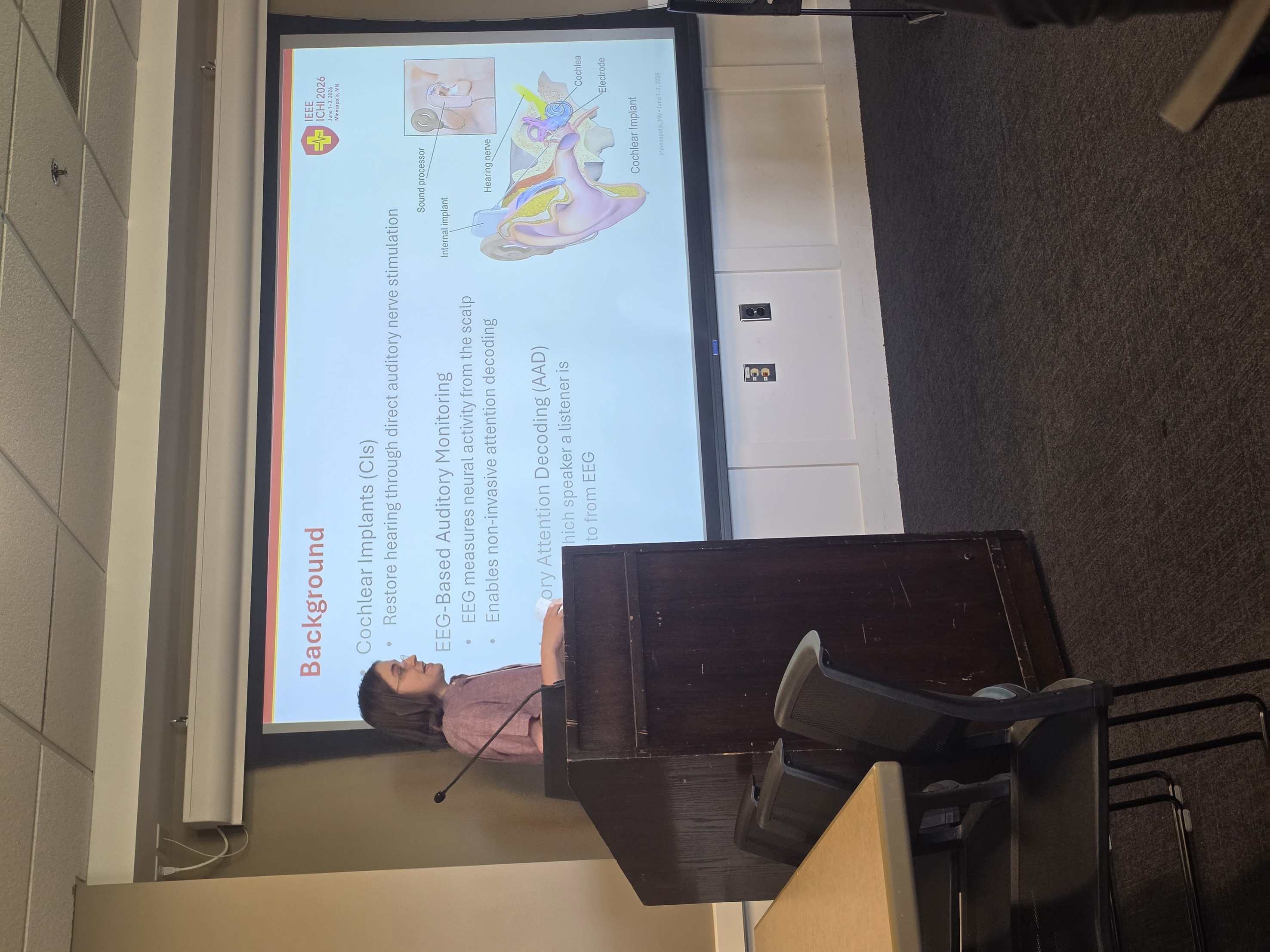
My research area is in Auditory Attention Decoding. AAD uses neural read-outs, like electroencephalogram (EEG) devices, to read brain activity and predict the sound someone is hearing. To do this, we train AAD algorithms to read brain information and select the correct sound from it.
AAD has applications for hearing aids that can adjust to the user’s attention on the fly, or neurofeedback training that trains people how to pay attention to certain stimuli. (For example, training your brain to be "healthier" as it thinks about a difficult puzzle.)
However, the field has so far been lacking research on subjects with cochlear implants. These devices help people hear with a surgical implant and external component, but they introduce new complications and difficulties.
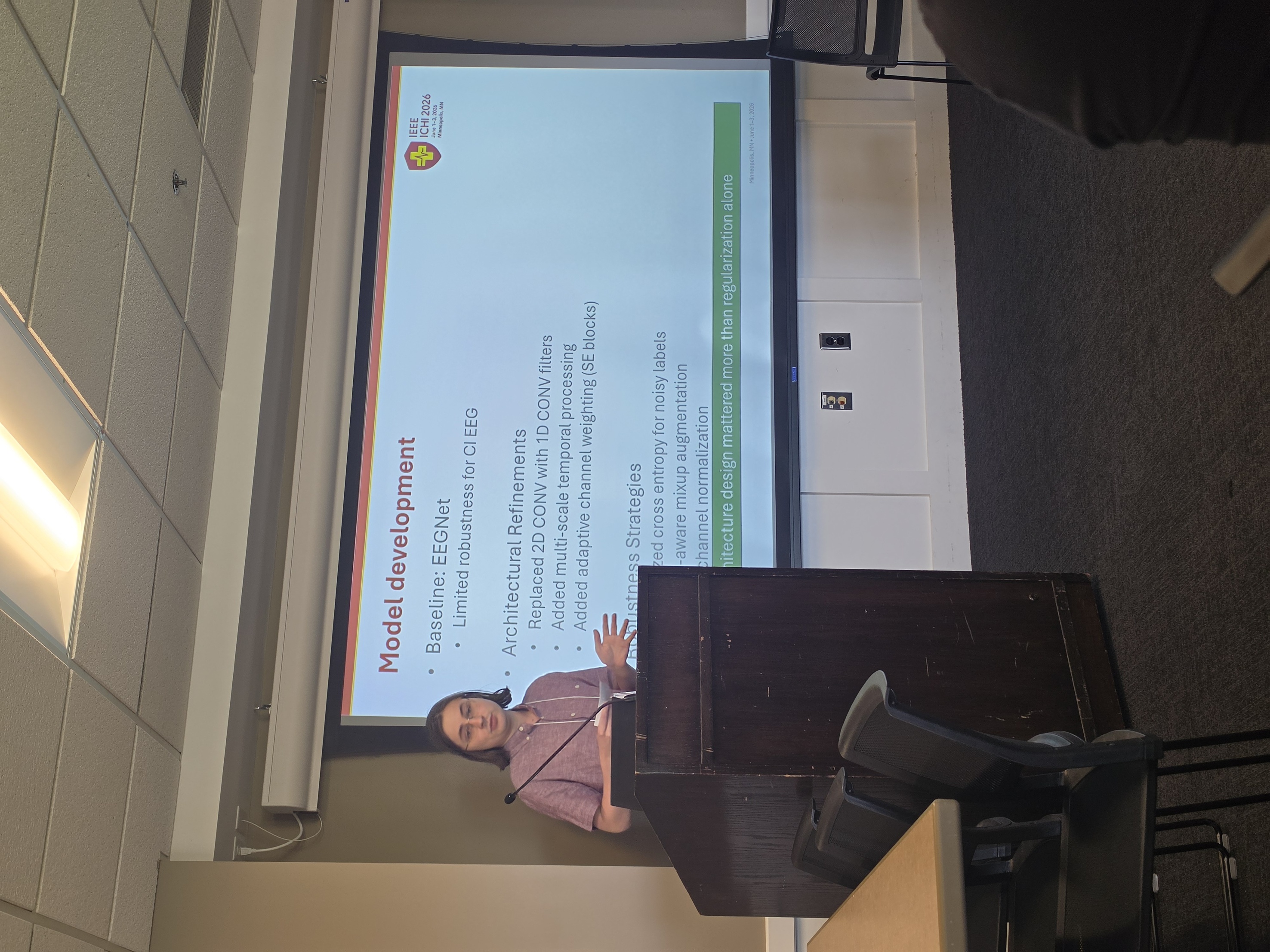
My paper involves creating a new deep learning model, specialized for AAD and cochlear implant users. The paper covers the model’s generalization cases, showing how the model can understand information outside of its training data.
We also presented a second paper, related to the study of systems, that described very fast denoising operations on small devices with computational limitations.

How was your experience at the Conference?
Minneapolis is not that big of a city, but I haven’t used such public transport as they have. When I first tried a tram, I wasted an hour going the wrong way because I didn’t realize they went in a loop.
The conference was more formal than I expected. Although my advisor joked that, when compared to the medical attendees, the Computer Science people were wearing informal clothing. There were a lot of presentations, over one hundred. I did not expect that many people. I was also a bit disappointed by the prevalence of AI generated images over some of the presentations.
This was my first time attending a scientific conference, and I would like to return and give another presentation. They had good steak.
Our field is slowly working toward advanced hearing aids and cochlear implants, known as neurosteered hearing devices. However, these devices are likely a long way off. My next plan is likely to survey technical literature for a summary of the latest model advancements.