FURF and SURF
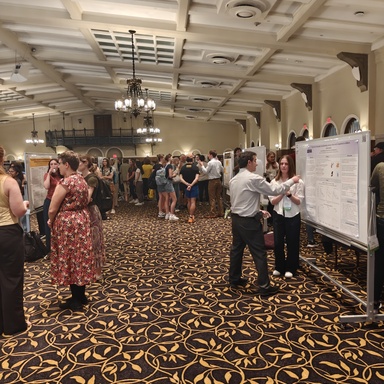
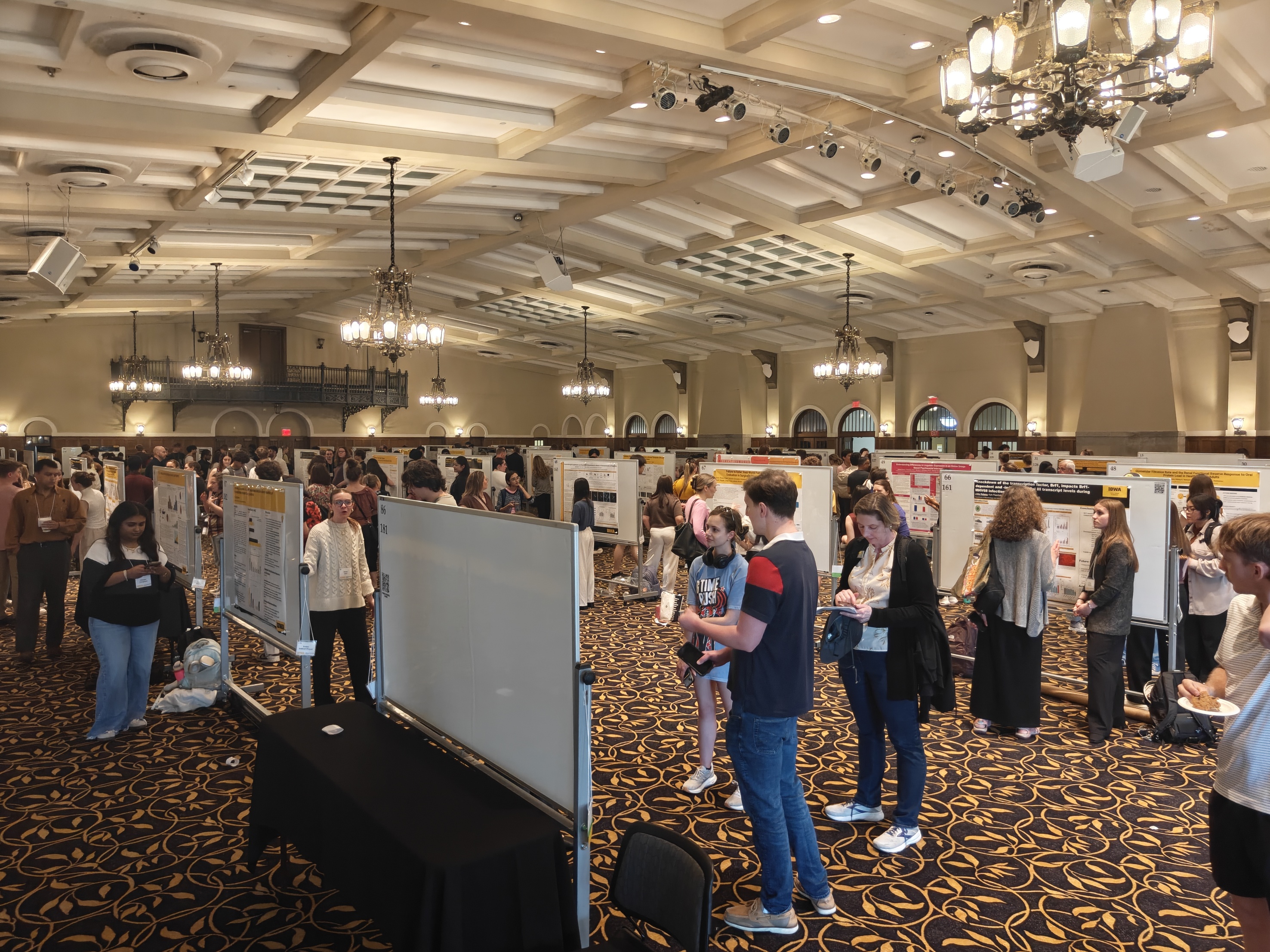
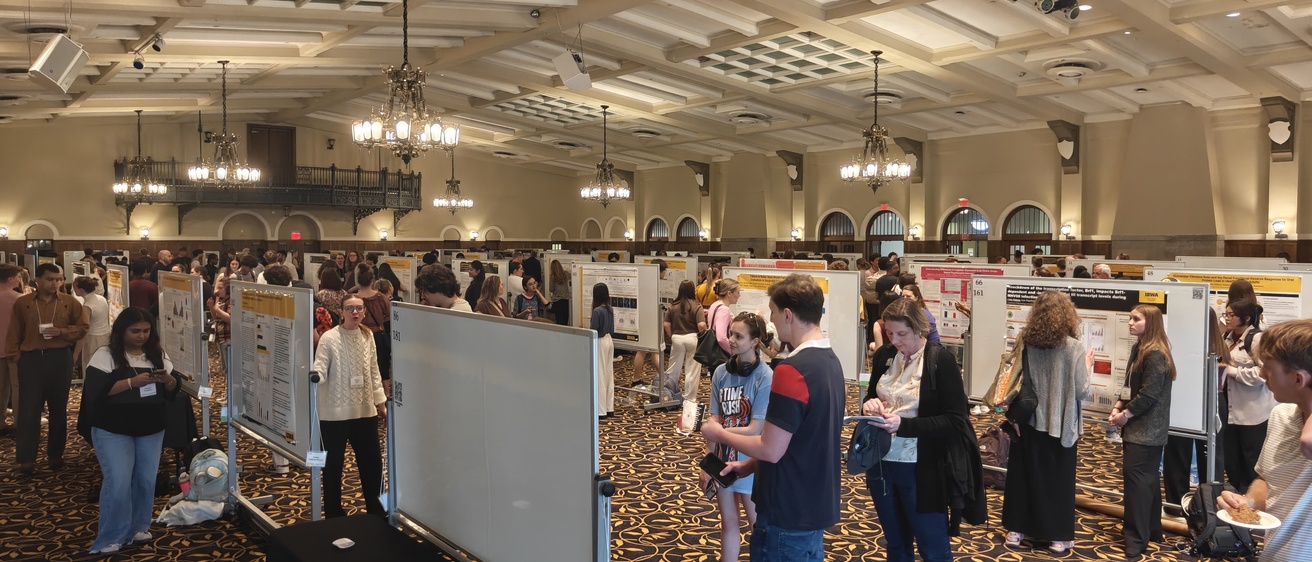
What are FURF and SURF? The Office of Undergraduate Research holds these Undergraduate Research Festivals in the Fall and Spring, respectively, to showcase the projects undergraduate researchers are bringing to the University of Iowa. SURF was held in April at the Iowa Memorial Union, and the turn-out from the research community was impressive.
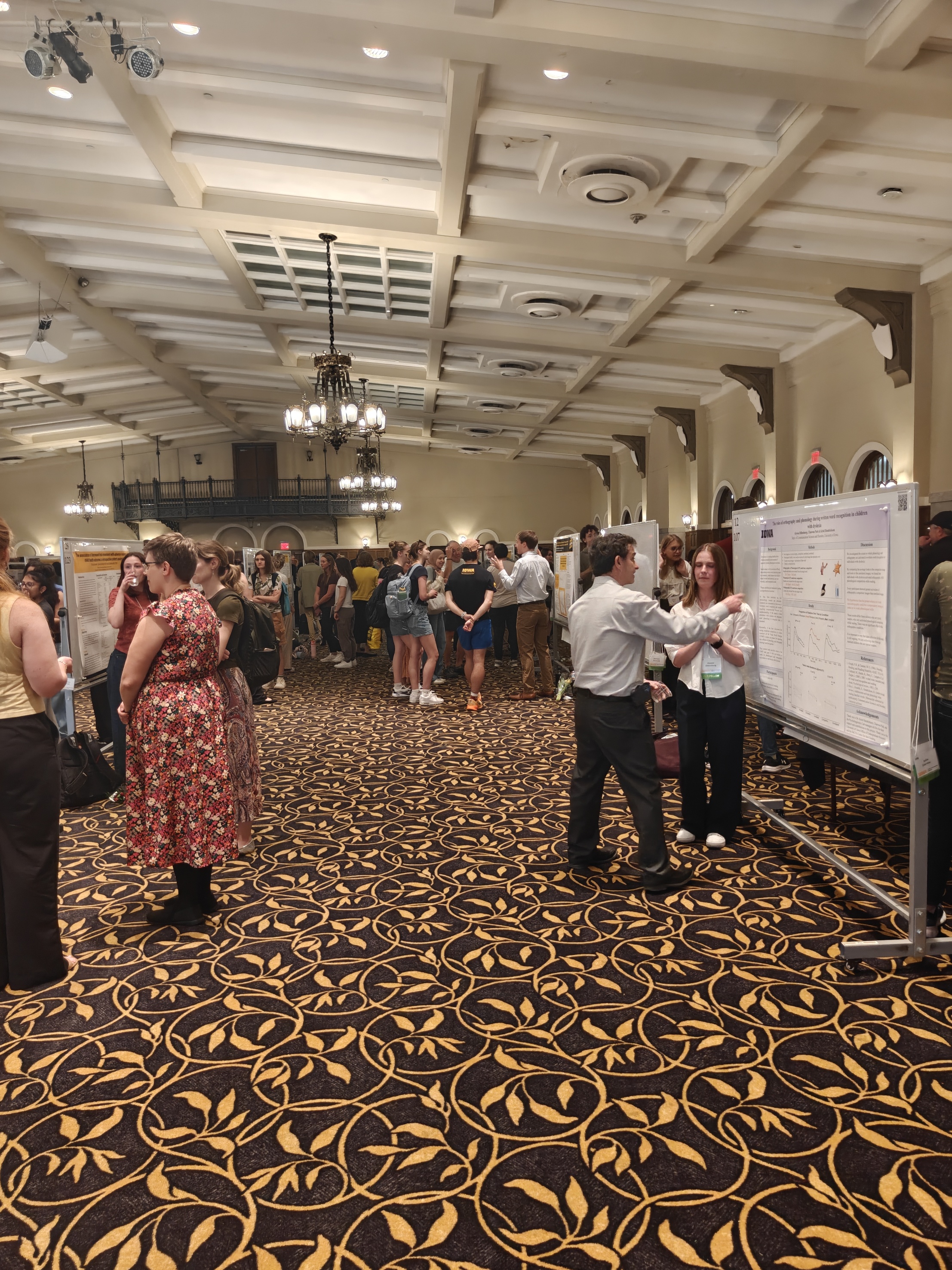
Hundreds of students, researchers, faculty, judges, and spectators filled the IMU’s International Ballroom. The event ran for two hours and, in that time, featured two rounds of presentations from the undergraduate research community. Around a hundred students presented at once, and guests were free to walk around the floor between their posters. There was plenty of activity across the room and discussions everywhere.
More information about future FURF and SURF events can be found on the Office of Undergraduate Research page.
Computer Science Presenters
Three students represented the Computer Science department at SURF this year:
DeAndre Steger, who combined his Psychology major with computer science for his research,
Siqi Li, who studies Computer Science and Engineering, and
Frederick Schultz, who studies Computer Science.
Each of these researchers presented a novel concept with the help of explanatory posters.
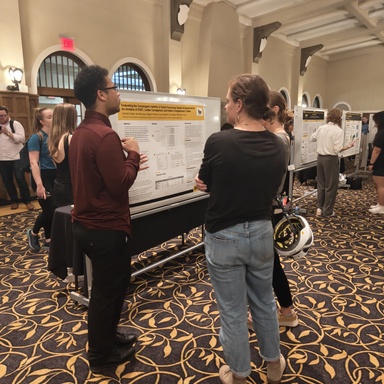
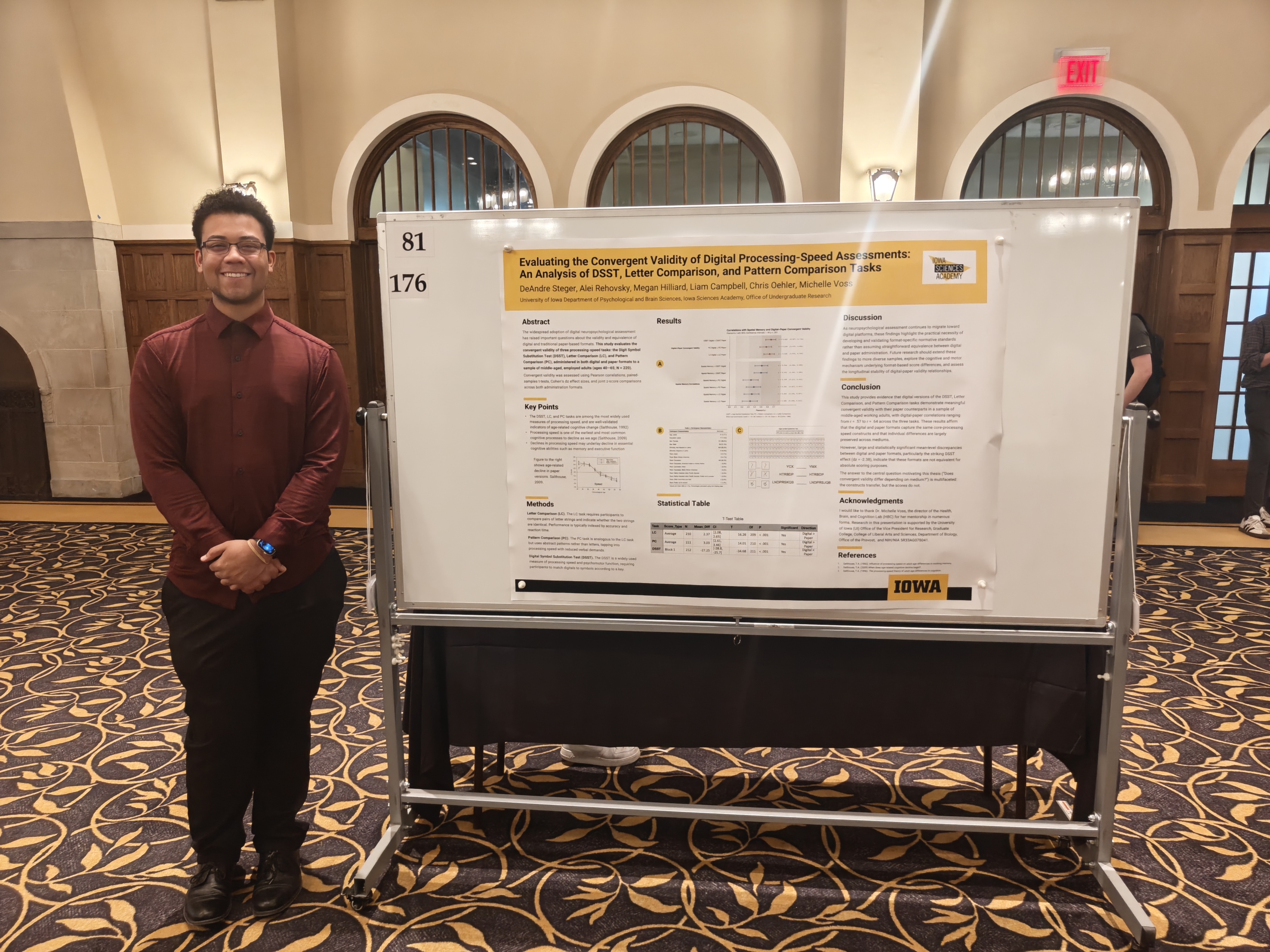
DeAndre Steger
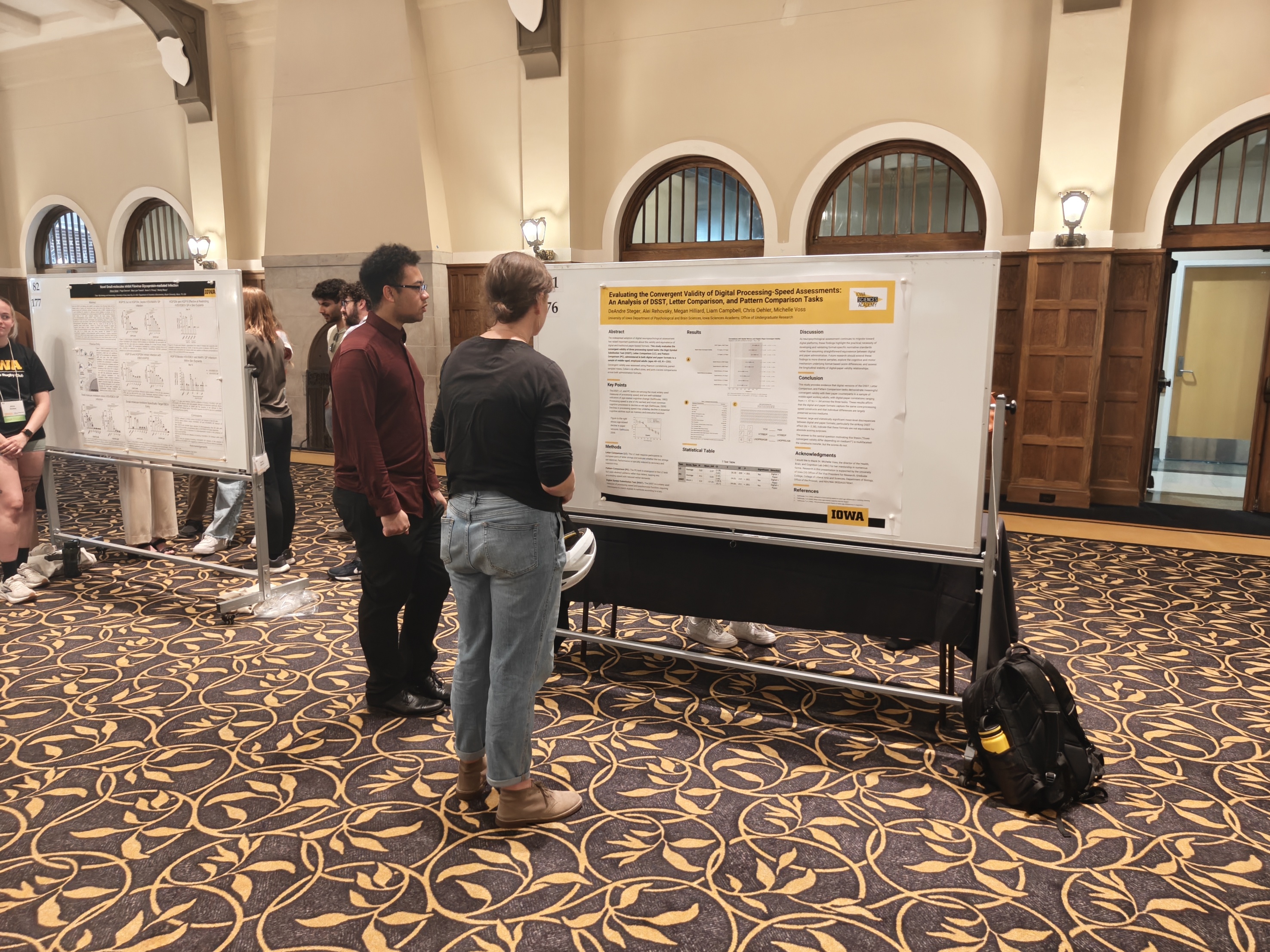
DeAndre’s research project was entitled: “Evaluating the Convergent Validity of Digital Processing-Speed Assessments: An Analysis of DSST, Letter Comparison, and Pattern Comparison Tasks.”
In this project, Steger administered processing-speed tasks to adults in both paper and digital formats. The three tasks, that evaluated the speed at which adults could process patterns, were the Digital Symbol Substitution Test, Letter Comparison, and Pattern Comparison. But Steger’s interest in research extends beyond the tests to how they were administered. His project analyzes whether the paper test and the digital test have similar levels of validity.
What this means: in an era when psychological assessments can be performed digitally, it is important to ensure that electronic tests are as accurate as paper versions.
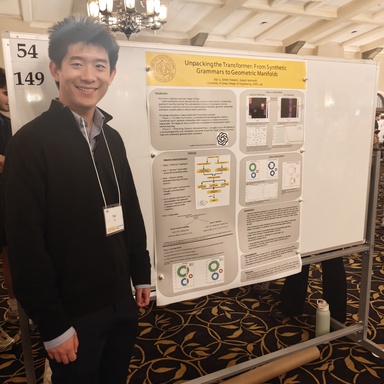
Siqi (Jason) Li
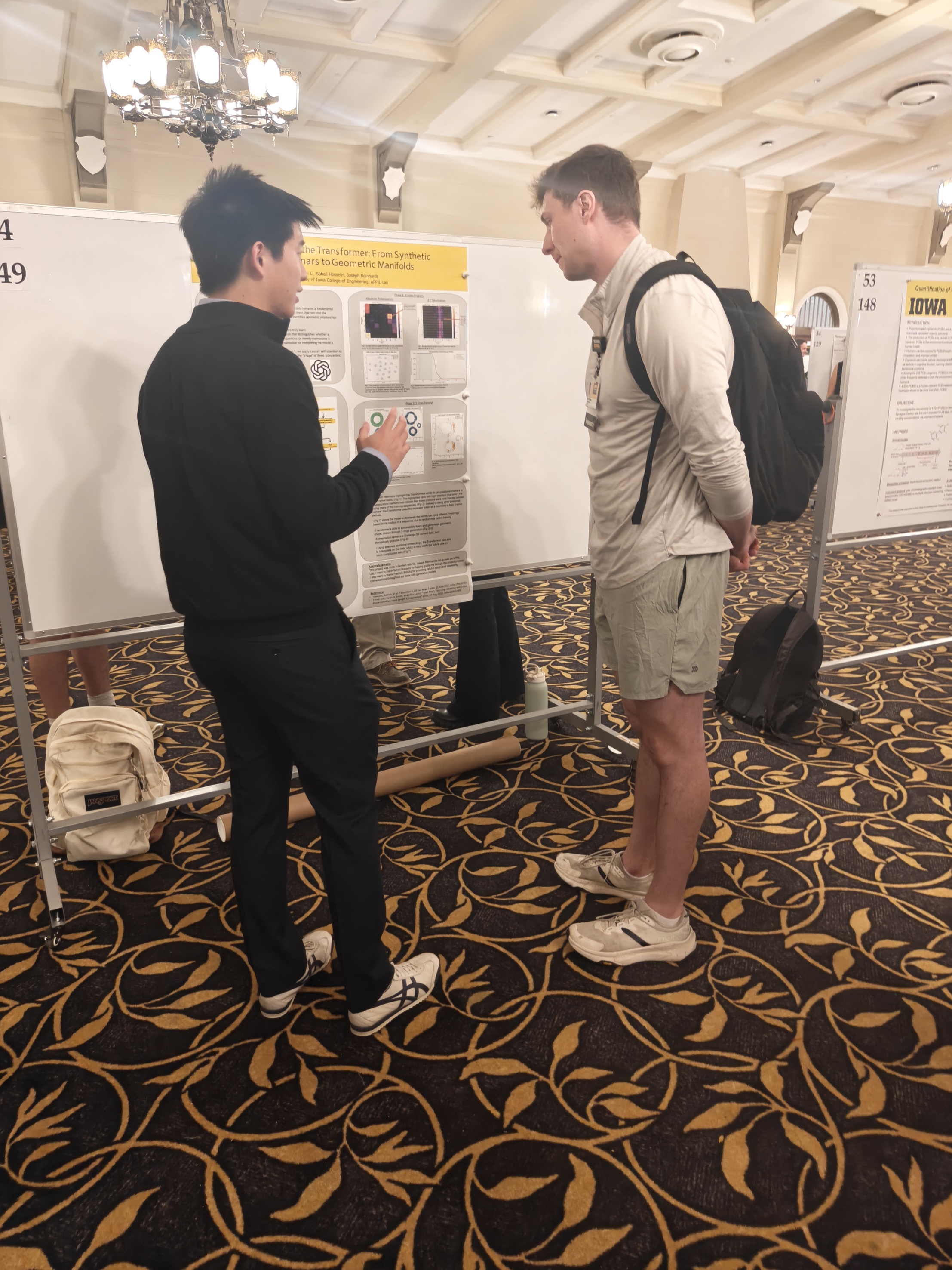
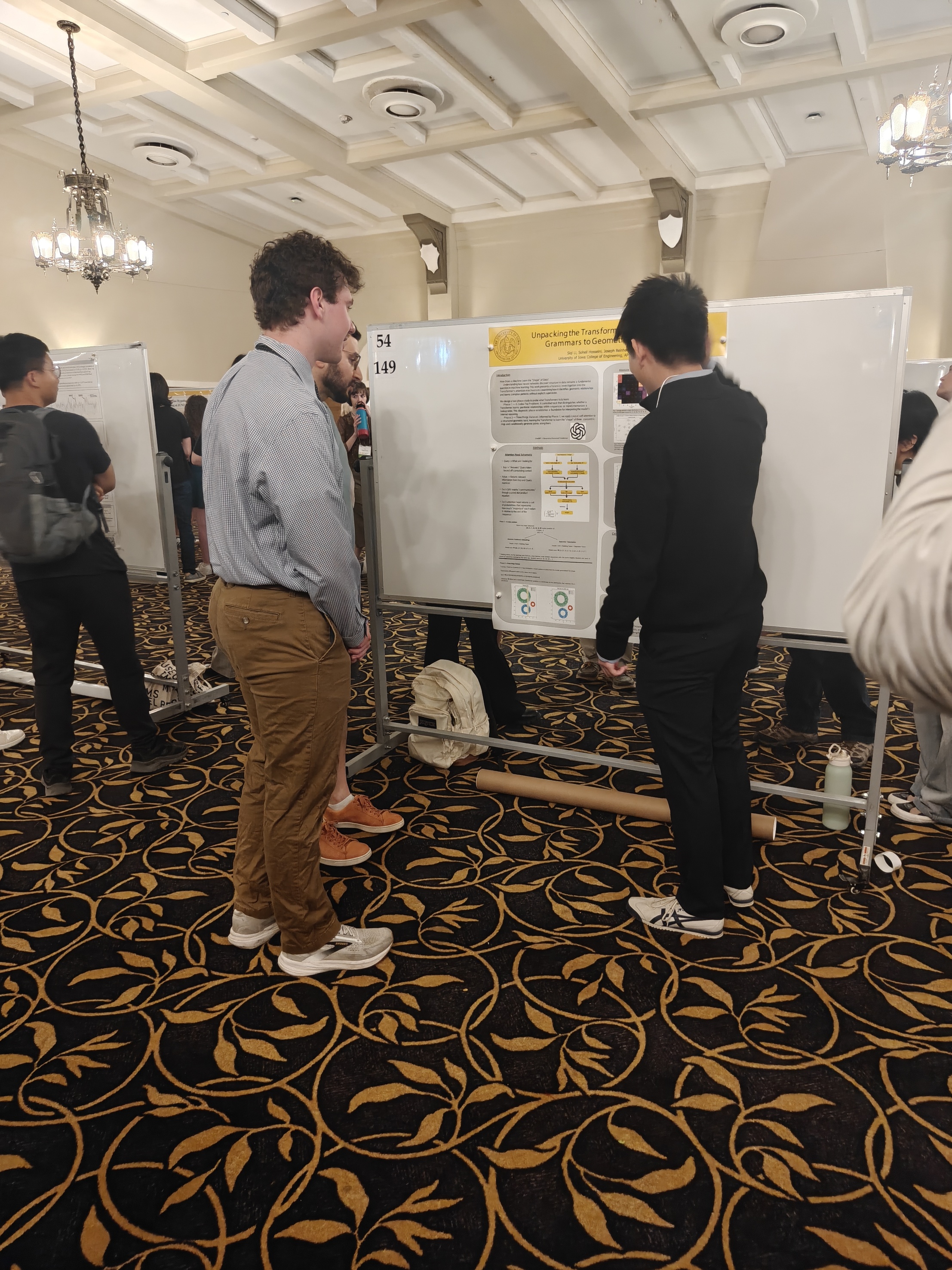
Jason’s research project was titled: “Unpacking the Transformer: From Synthetic Grammars to Geometric Manifolds.”
In this project, Li analyzes the ability of machine-learning systems to understand datasets. He does this in two steps:
First, he presents the model with sequences of unseen lengths to demonstrate how the model develops relationships between numbers. Second, by transferring these relationships onto a 2D grid, Li demonstrates that the model can “imagine” a complex system as something in space.
Overall: Li’s research synthesizes these methods to show that the model isn’t only recognizing patterns but also understanding data it generates.
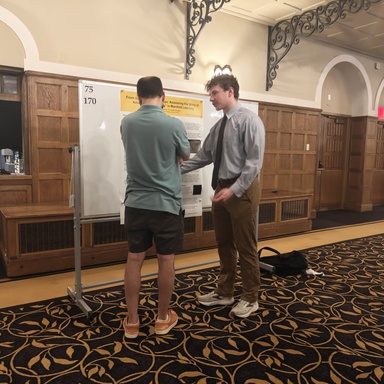
Frederick Schultz
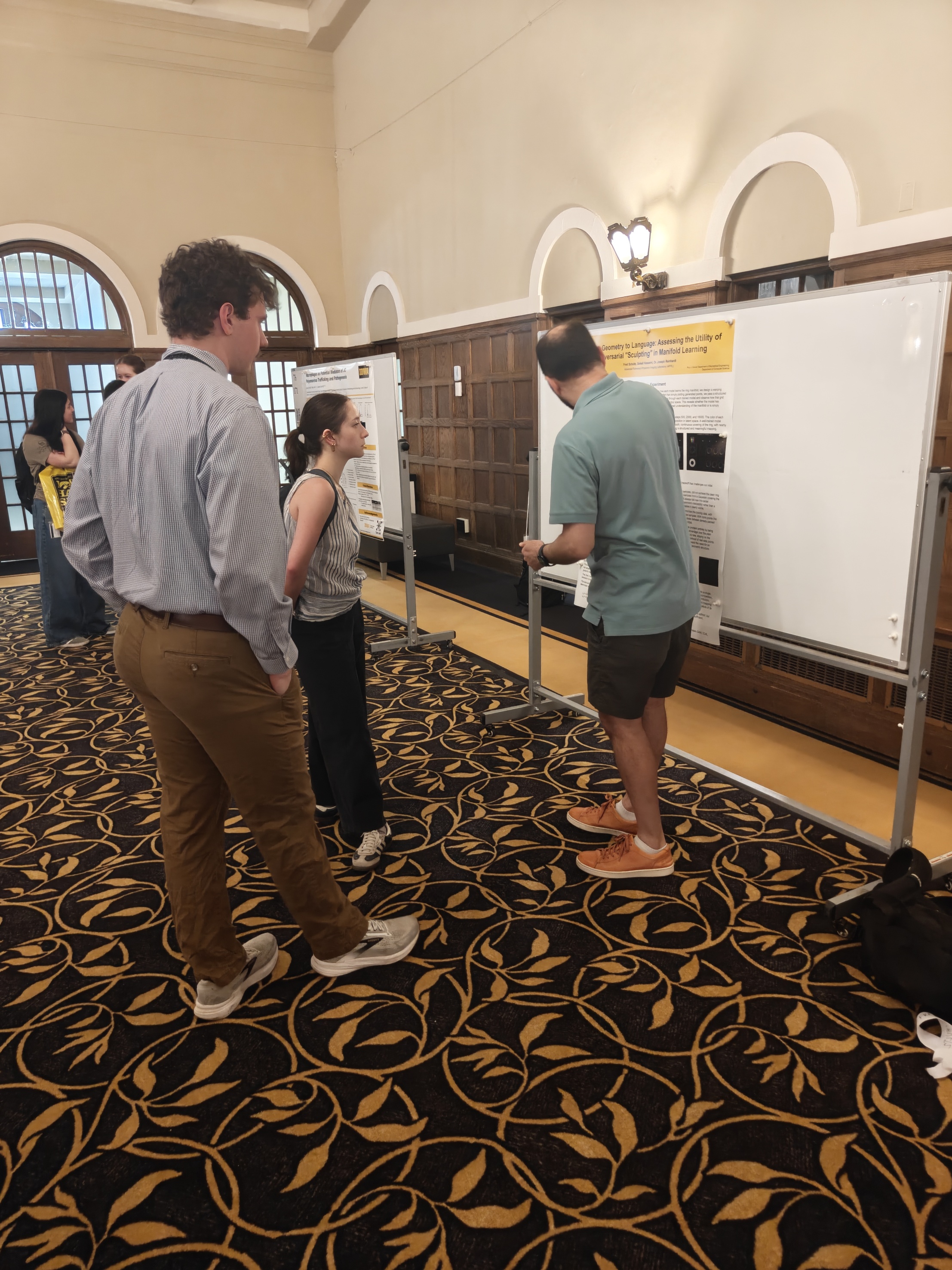
Frederick’s research project was entitled “From Geometry to Language: Assessing the Utility of Adversarial ‘Sculpting’ in Manifold Learning.”
In this project, Schultz creates a pipeline of analysis cases, beginning with a dataset of concentric rings, to understand how AI models can incorporate user input into their learning. The first “Ablation Case” shows that without a “Critic” to judge the authenticity of the data, the model will not capture the data properly. In the second “Conditional GAN” case, a Critic is used to manipulate the output, resulting in a smooth distribution of data. And in the third “Semantic Bridge” case, the Conditional GAN is combined with a large language model (or LLM), allowing users to instruct the learning system with natural language prompts.
Overall: The pipeline turns “Language-into-Geometry,” giving the user the ability to instruct the system and how it learns.