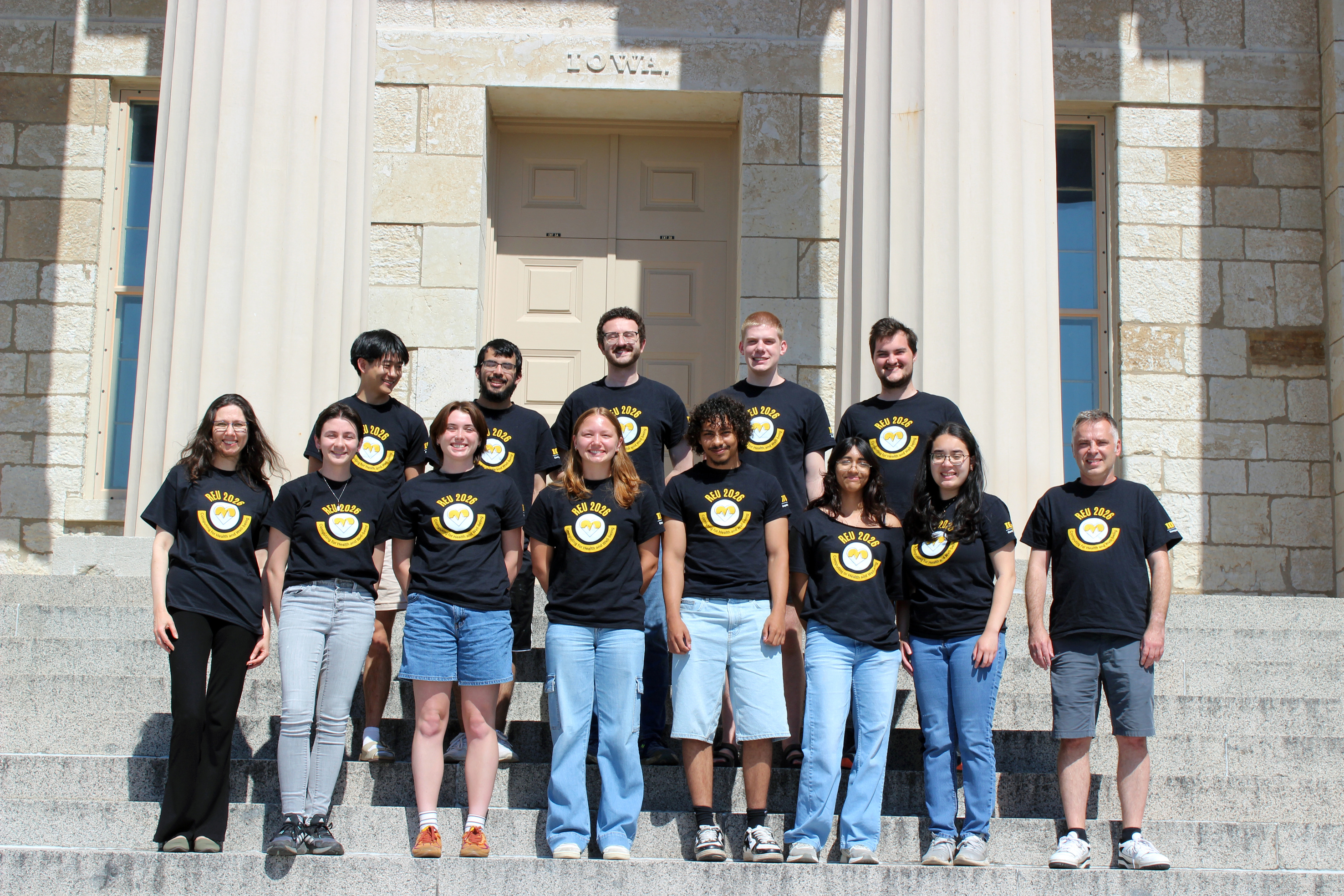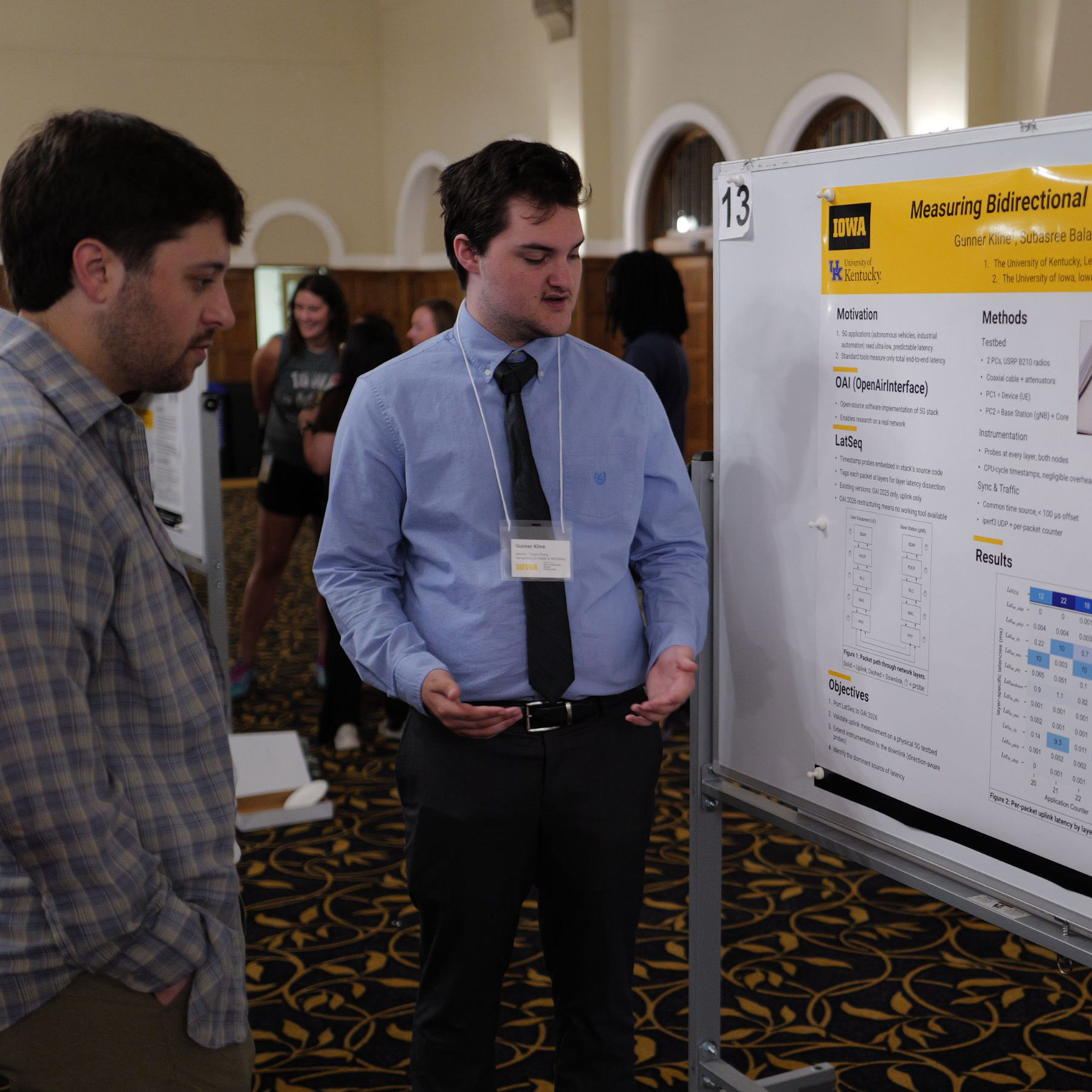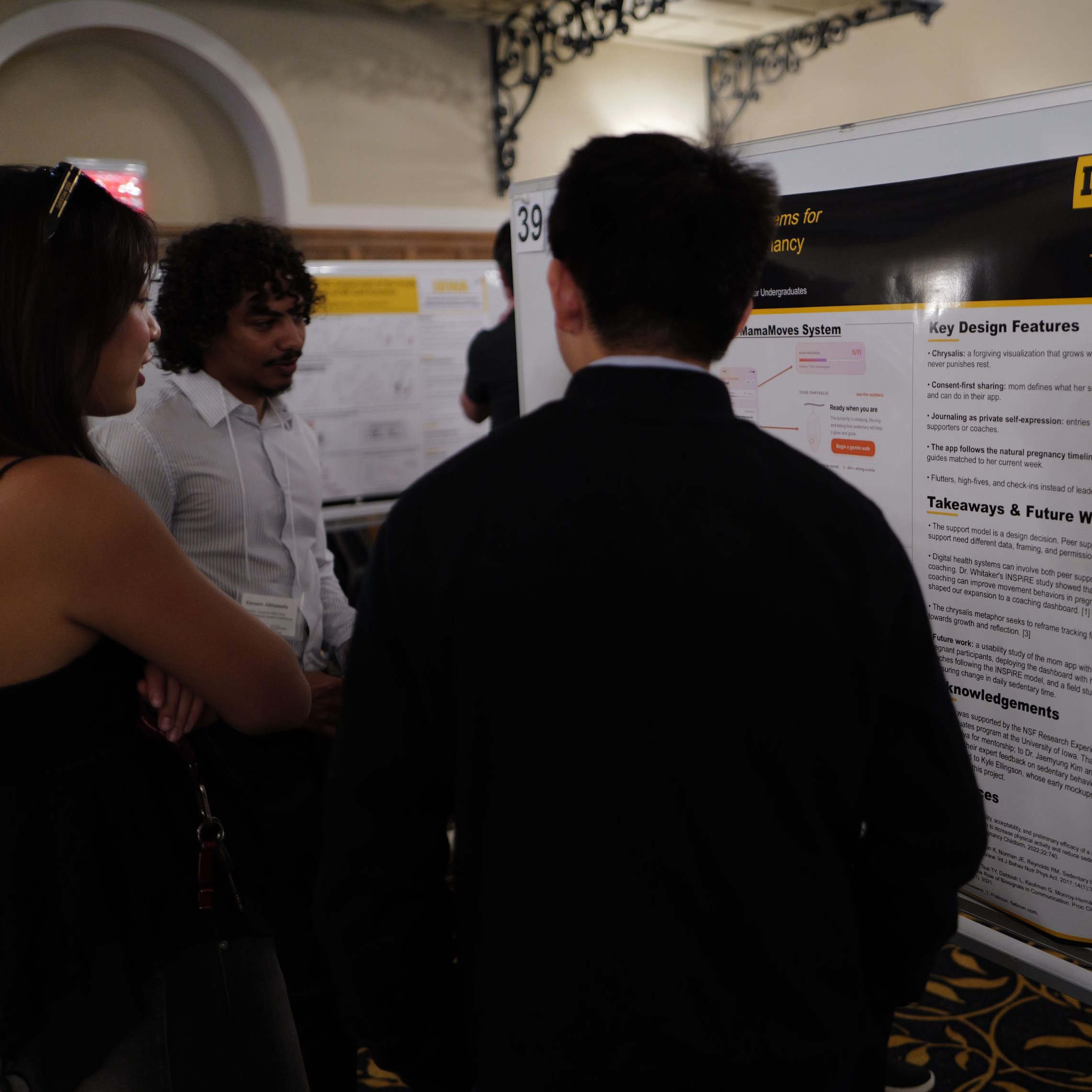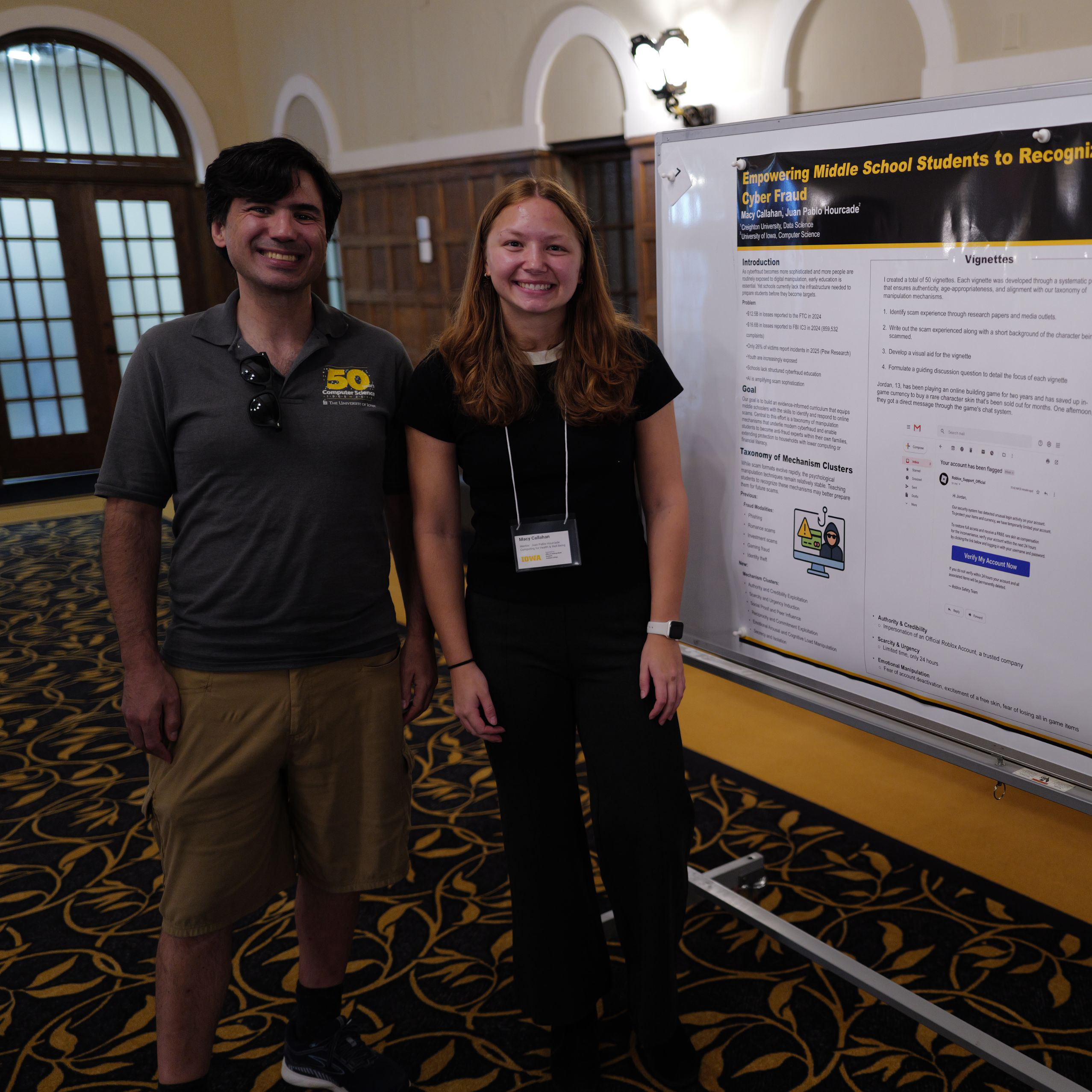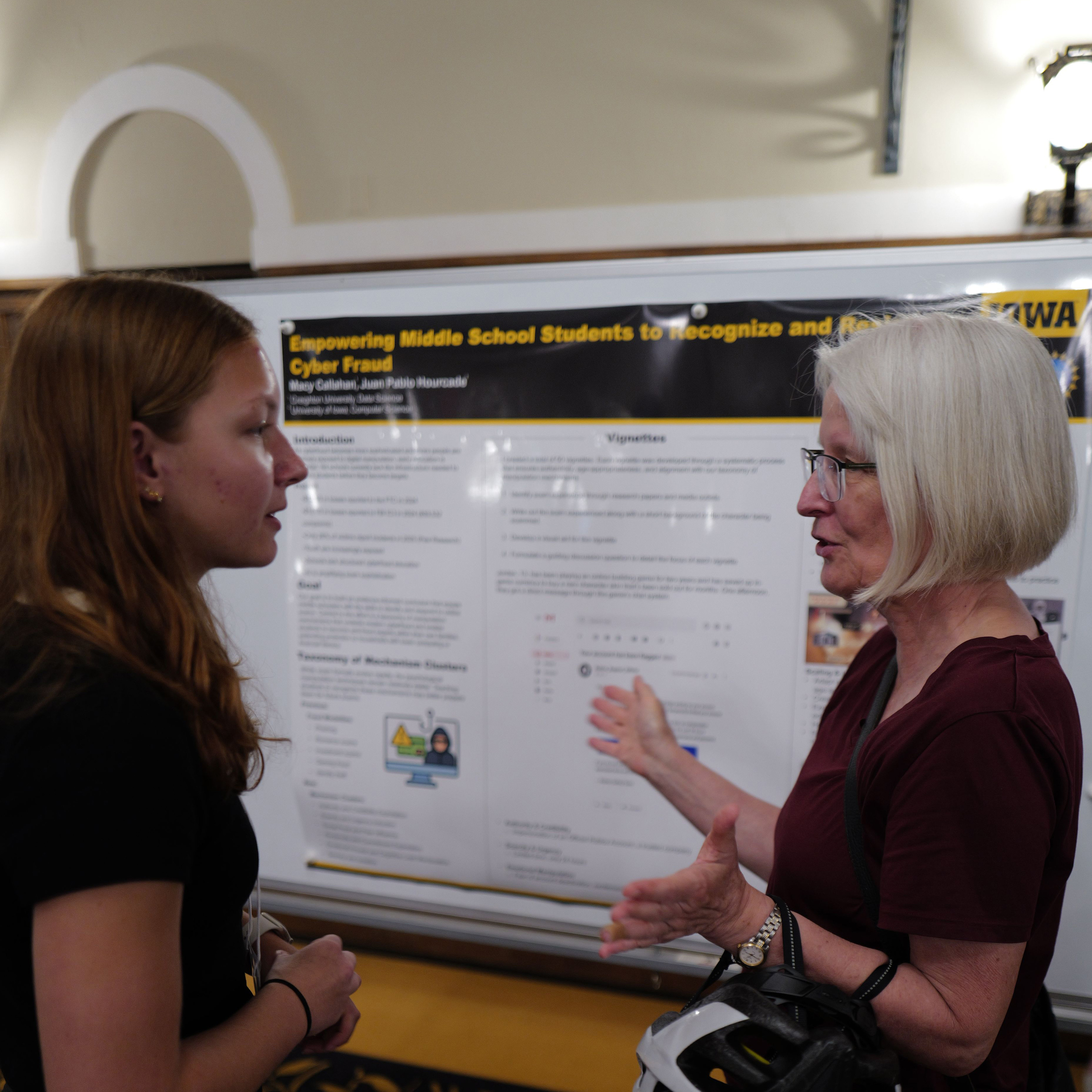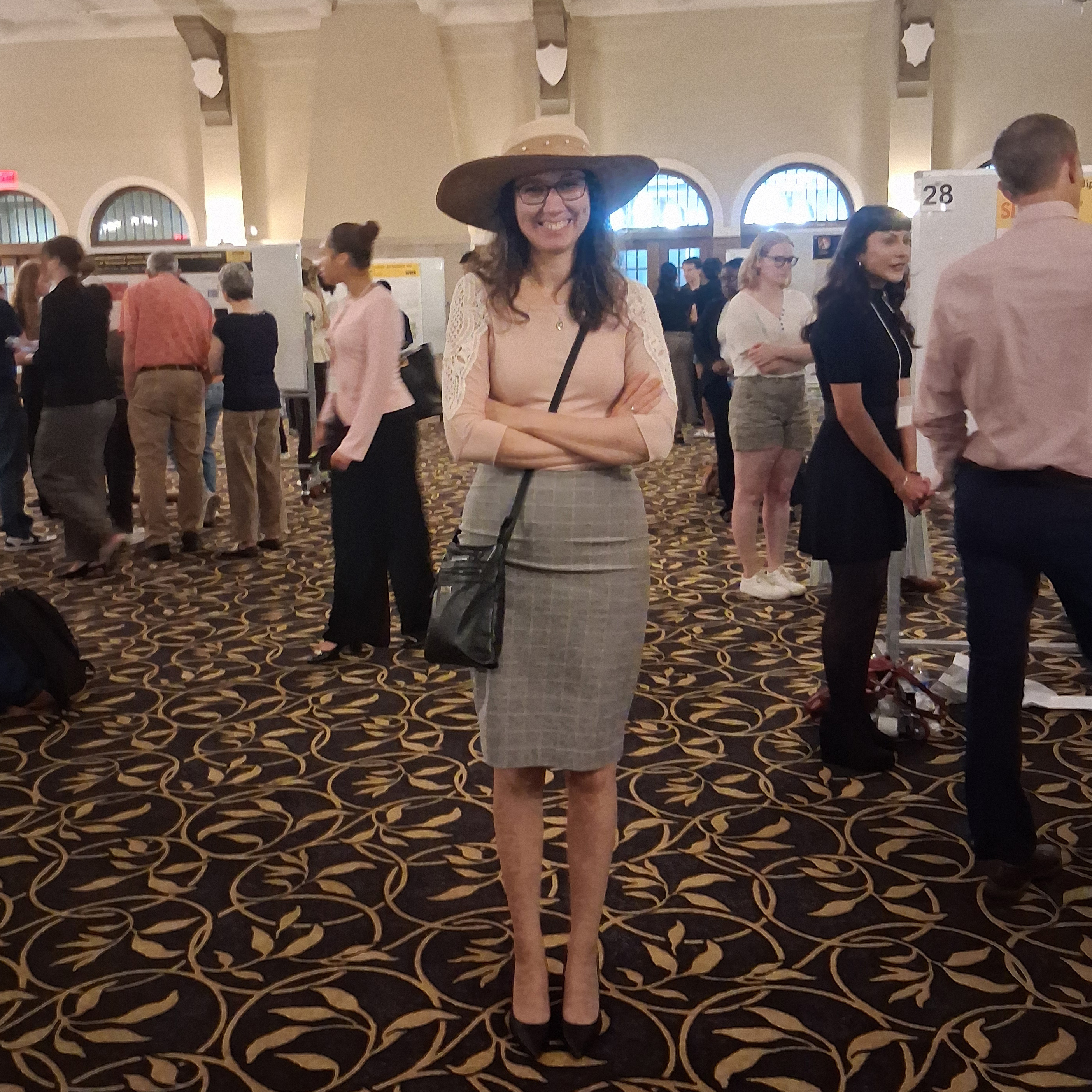
This summer, our Department of Computer Science held its fifth successful REU on Computing for Health and Well-being, welcoming students from across the nation.
The program, funded by the National Science Foundation (NSF) is a 10-week full-time experience that provides students with a stipend, housing, and meals. Each student joins a faculty mentor’s research group—often made up of faculty, graduate students, and other undergraduates—and contributes to interdisciplinary projects. While at the University of Iowa, participants also enjoy social events and excursions to ensure the summer is both productive and fun.
As a capstone to the summer experience, REU participants each create and present a research poster on their work and participate in the Summer Undergraduate Research Conference (SURC) offered by the Graduate College and the Office of Undergraduate Research.
Below are reflections of three of our 2026 REU participants on the highlights of their summer experience:
Inika’s experience
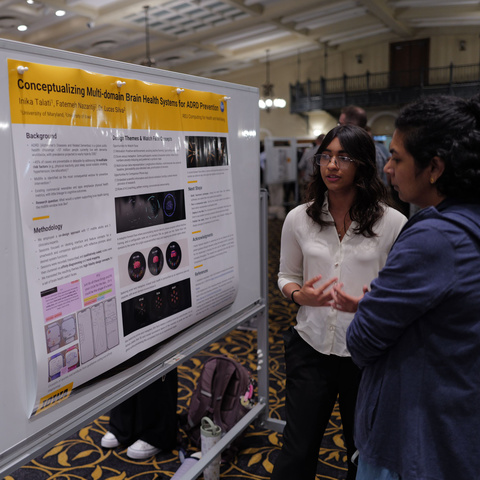
Inika Talati, an REU participant, and student from the University of Maryland, College Park, shares her experience and a little about her research as part of her mentor Dr. Lucas Silva’s team:
“I worked on a co-design study exploring how midlife adults conceptualize a smartwatch and companion smartphone app for tracking brain health, in the context of preventing dementia. The goal was to understand what this population wants from such a tool and to involve them directly in shaping its design,” says Inika.
“My work spanned the full research process: I started by reviewing and annotating relevant research papers to ground the project in prior work, then moved into user research — sitting in on participant interviews, taking notes, and sharing insights from the sessions. I helped code the interview transcripts to organize our findings into affinity diagrams to surface key themes and finally translated those insights into high-fidelity watchface concepts. Getting to follow a co-design project all the way from literature review through user research to design was really rewarding.”
REU: A preview of graduate studies and academia
“My favorite part about the REU program was getting to work closely with a grad student — she was so welcoming and honestly amazing to learn from. I also loved the panels we had with different professors and grad students, which gave us a real sense of academia: what applying to grad school is like, and how to think about industry versus research. And I really valued being able to dig into the work and move at my own pace.”
Career clarification and preparation
“The experience taught me a lot about the field I'm interested in — UI/UX (User Interface/User Experience) — and opened my eyes to how many different areas exist within human computer interaction (HCI). Seeing that range helped me understand the field more deeply and gave me a much clearer picture of the career paths available to me going forward.
What’s Inika’s advice for undergrads thinking about whether or not to join an REU next summer? “Apply, apply, apply! Make the most of your summer. Use resources like the NSF and ETAP websites to find programs, and go for REUs, not just internships — especially if you're a first- or second-year student. It's such a valuable way to explore research early.”
David’s experience
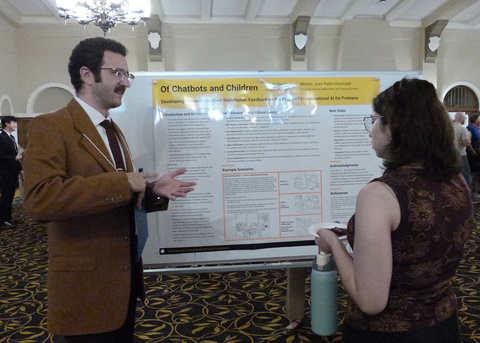
David Steele came to Iowa’s REU program from Niagara University in New York. His mentor was Prof. Juan Pablo Hourcade.
“My work focused on investigating the ethics of conversational AI agents for 10- to 12-year-old children,” sayd David. “As one of the first steps in a much larger project, I drafted a set of discussion scenarios describing ways preteens might interact with artificial intelligence in the near future. These materials will be presented to focus groups of parents, teachers, older siblings, and other people who live or work with children. We hope that their insights will help us develop a framework to guide ethically conscious design and utilization of AI tools going forward.”
Using technology for the greater good
“I am very grateful to have had the chance to work on research that aims to benefit society at large. One of my biggest worries about studying computer science is just how much thought in the field is dedicated to pushing the boundaries of what technology could do, so it was greatly rewarding to instead consider what technology should do.”
“Working with and learning from the excellent faculty at the University of Iowa — especially my mentor, Dr. Hourcade — solidified my desire to attend graduate school. I have already begun looking into PhD programs to apply to once I finish my bachelor's degree!” says David.
David’s advice for those considering an REU program
“Don't just send out a bunch of applications willy-nilly; instead, take time to look into each program and find ones that match your own interests and experience,” David recommends. “Not only will that improve your odds of being accepted, but you will also find a lot more enjoyment in working on a project that you actually care about.”
“If anyone's on the fence about applying, I'd absolutely recommend doing so. My REU experience was educational, rewarding, and a lot of fun, to boot.”
Rayne’s experience
Rayne Aurit joined our REU from the University of Nebraska-Lincoln, and also worked with mentor Prof. Juan Pablo Hourcade.
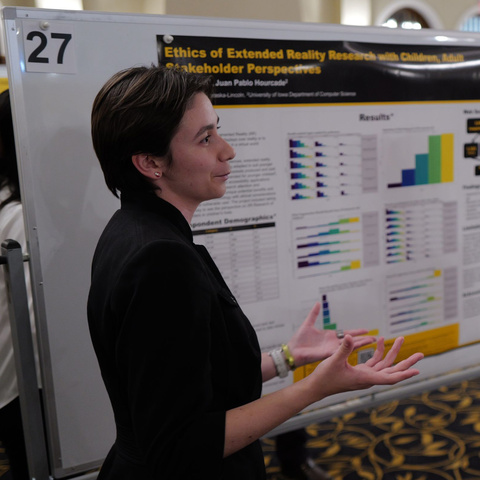
“The research project that I worked on was the Ethics of Emerging Technologies for Children, broadly,” explains Rayne. “The title of my poster is the Ethics of Extended Reality Research with Children, Adult Stakeholder Perspectives.
“Coming from a statistics background, I took on a role of creating graphics, checking code, and making suggestions for the analysis portion of the project. Previously done was the web survey deployed across the nation by a third-party web survey company, gathering 2,000 respondents.
“Aside from my contributions, I spent a lot of time getting familiar with the project having come in at such a late stage without prior knowledge, looking through results, and creating items to make reading the results a lot easier.”
Collaboration: The best part of REU
“My favorite part about the REU program was being able to experience the life of another campus with a group of peers working on projects in the same field. Our group created a Minecraft server, went to the art festival, block festival, jazz festival, pride, would play basketball and rock climb occasionally, played Farkle during many lunch periods, watched movies together, and more.
“Iowa City is a special city with campus right in the heart of downtown, and there is a lot more happening than what is at face value. A small bit of digging goes a long way.”
Clarifying graduate school goals
“Hands-on experience with research is very valuable when applying to graduate school. A lot of the workshops put on by the Office of Undergraduate Research made me think more critically about the type of person I want to become when applying to a graduate program in order to have the best success,” says Rayne. “In a world where AI is becoming more and more encouraged, it is easy to become a back seat participant in research or any work that you are doing with computers and coding.”
Clarifying career realities
“Conducting research brings about a lot of freedoms that you would not see in a regular industry job. You are your own boss in scenarios, ignoring the looming threat of funding and the university affiliation,” Rayne learned. “Your day-to-day schedule is entirely constructed on your own as well as how you tackle the problem at hand. Whether or not that is something you enjoy is up to you, but also an REU is a perfect opportunity to see if that work style is something that fits.”
“On a personal level, I love the atmosphere of a college campus. It is a living, working community that is a lot different than your typical industry opportunity that often requires a car. Everything is walkable, there is a lot of history in its walls, there are many activities to do with like-minded people outside of the computer science community, and often the people on campuses have more altruistic motivation in the work that they are doing.”
Rayne’s recommendation?
“This REU specifically is centered around the wellbeing of others and problems in the health sphere. My advice would be to use a lot of intention in your application and make the most of the opportunity if you are given it!”
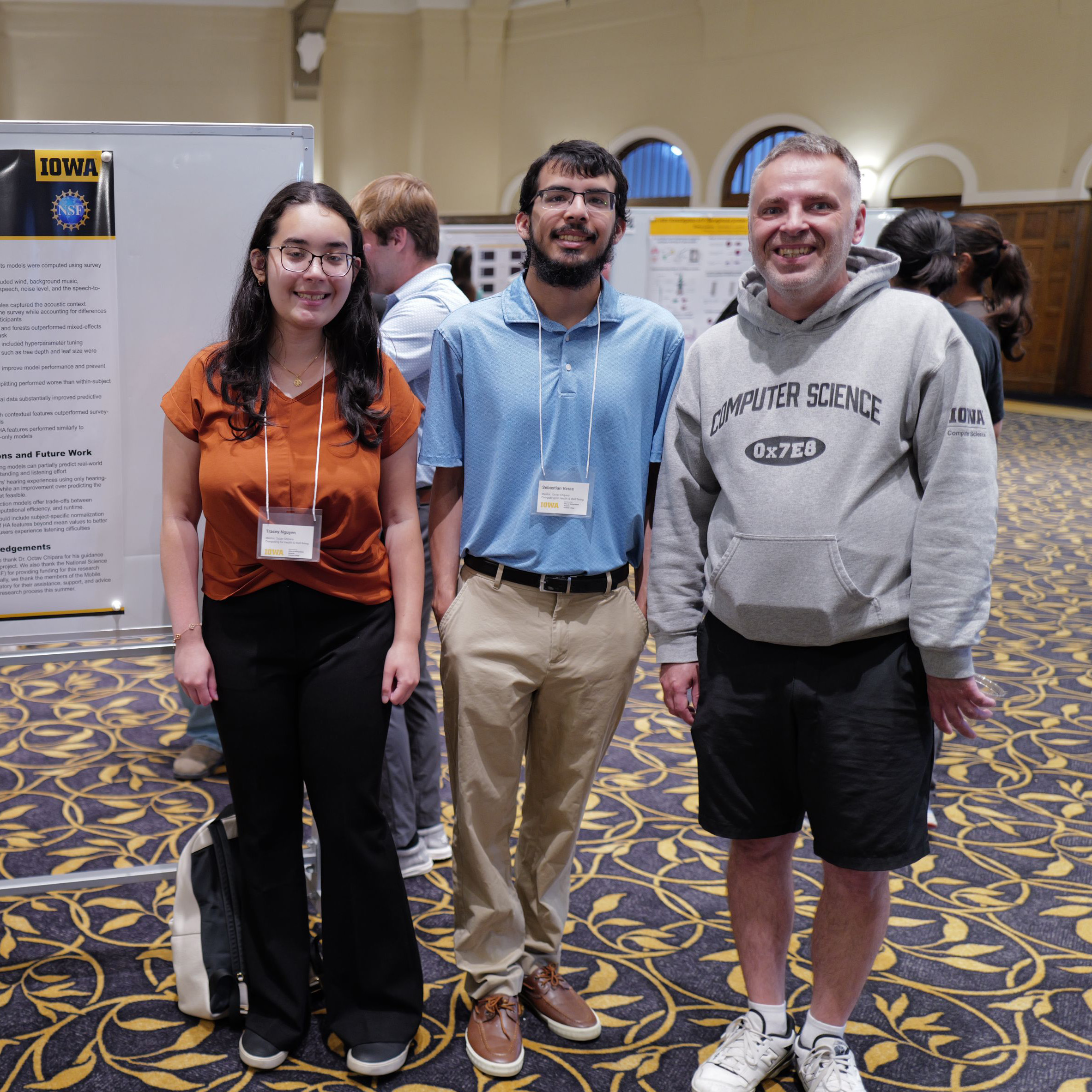
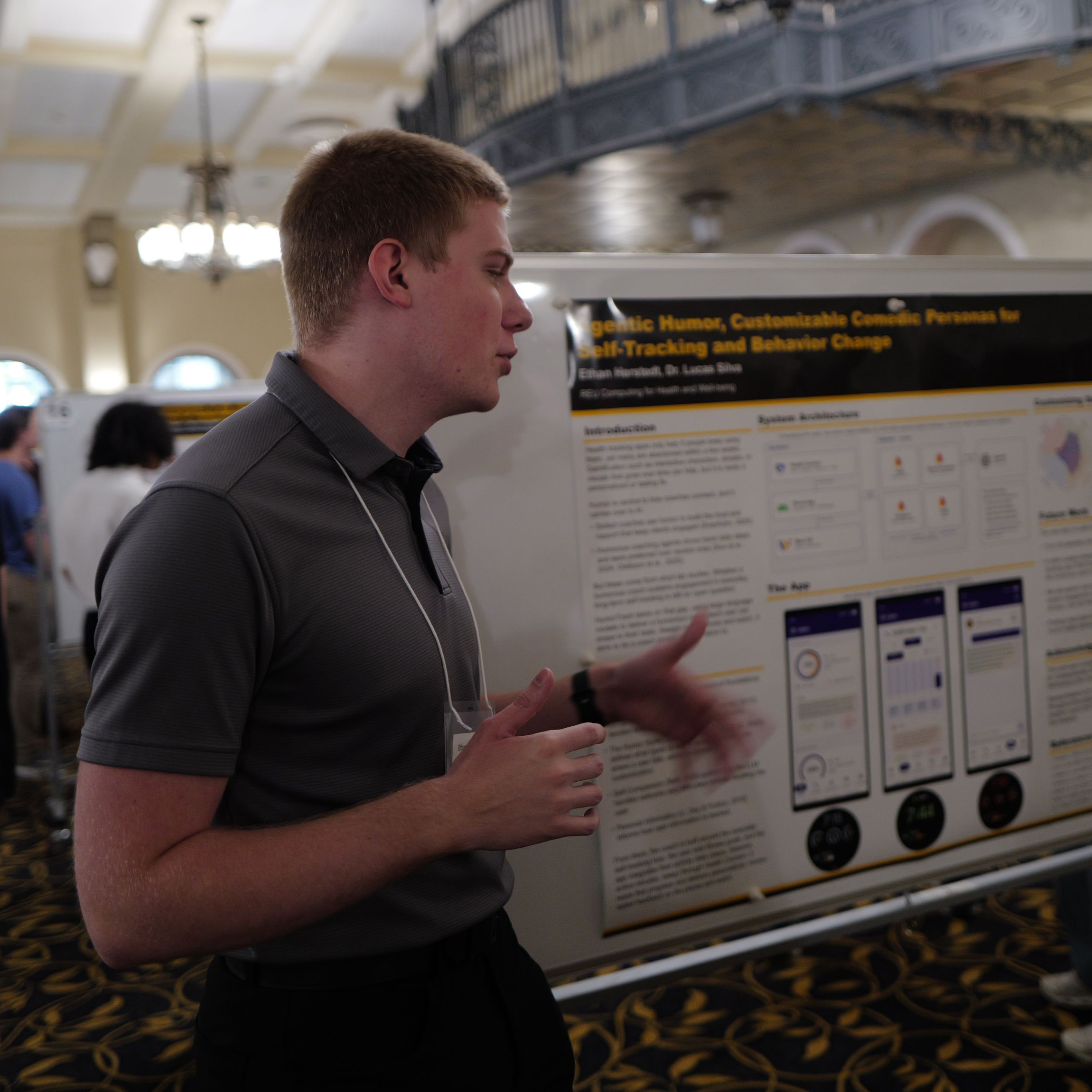
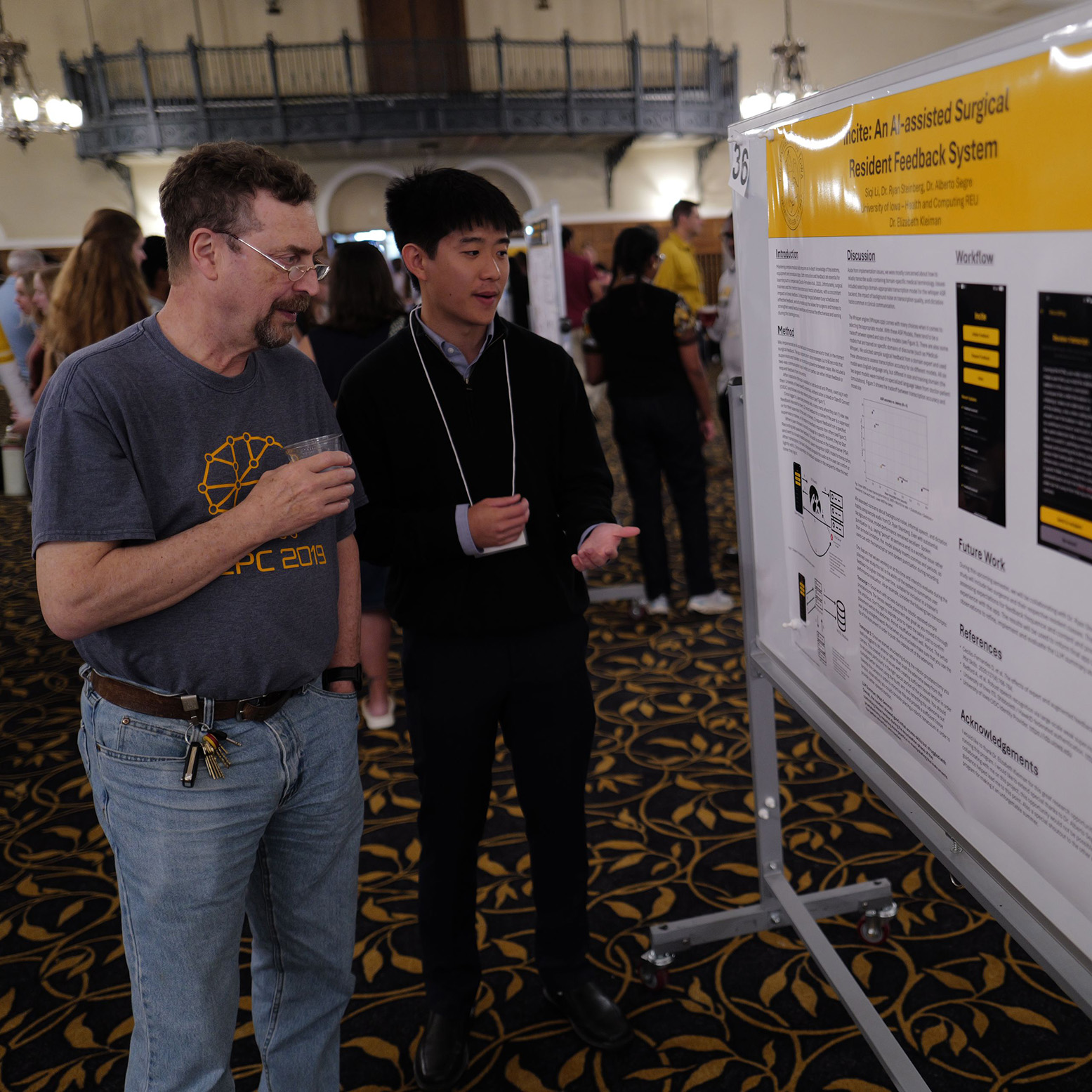
Below are photos of our REU ’26 participants at their SURC research poster presentations: