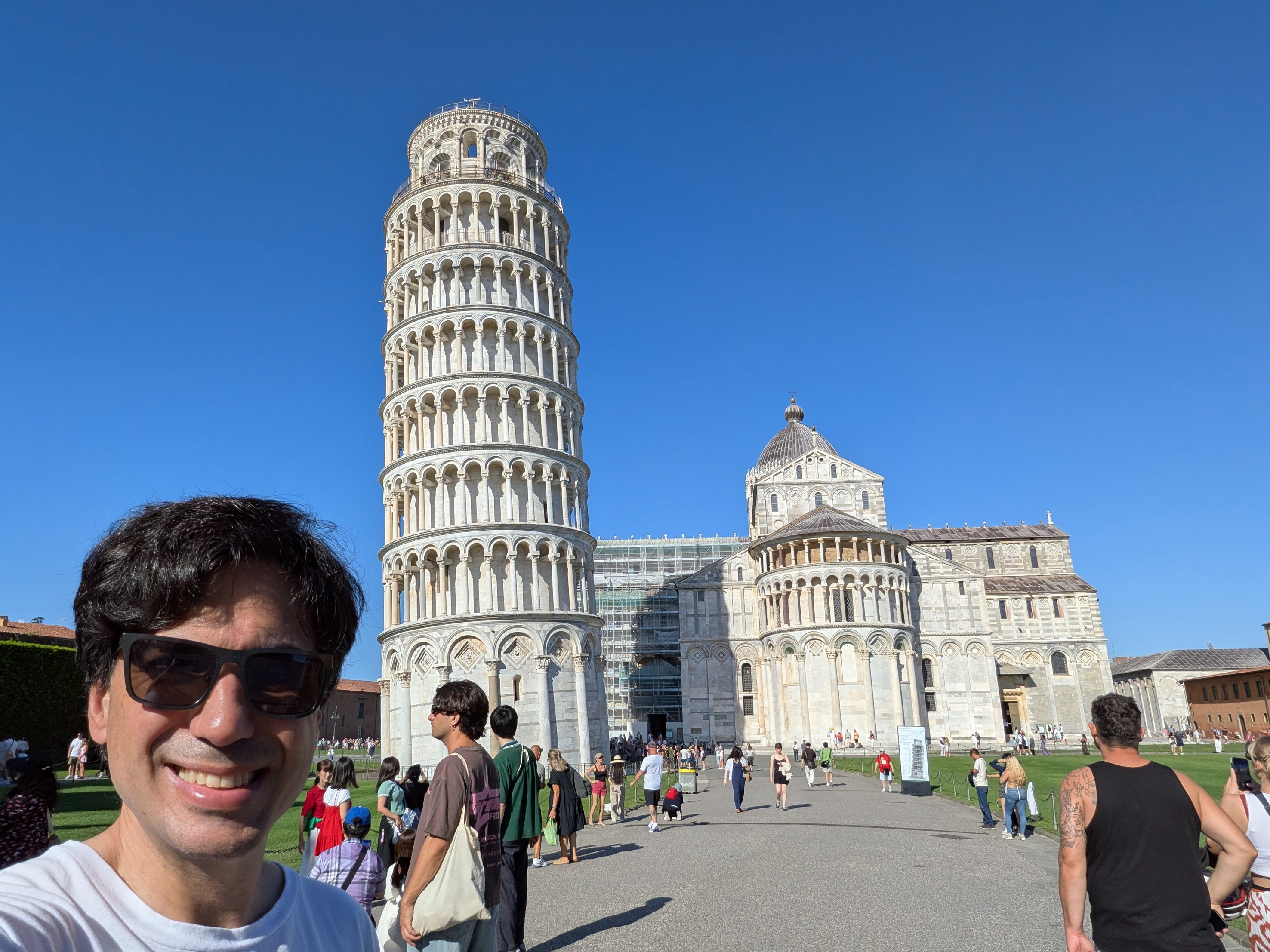
Juan-Pablo Hourcade is a professor at the University of Iowa. Recently he presented at the GoodIt 2026 conference, a computing-related event held in Piza, Italy. Professor Hourcade has attended the GoodIt conference in the past: three years ago, when Lisbon, Portugal held the event. He attended after a peer recommended he present his research there.
What is the theme of GoodIt?
I’m interested in the topic of human-computer interaction: how humans can use interfaces to work with computers. GoodIt is a conference that revolves around using technology for social good. It is a mix of researchers from different computing areas that come together to present their ideas about technology ethics.
A third of conference attendees were also involved with human-computer interaction. The other two-thirds were interested in technologies that can help the environment, and how to use block-chain technology for social good. (Blockchains keep records secure and mark interaction trails; scientists can use them to organize social projects). It was clear to me that everyone at GoodIt had a lot of thoughts about technologies and their lasting societal impacts.
What interested you the most about GoodIt?
The most interesting topics at the GoodIt conference, in my opinion, were the presentations further away from my area of speciality.
There was research for satellite sensors that take images of the Earth to investigate environmental impacts in specific areas or gather various types of data, such as the number of trees. This is now possible since local sensing and satellite imagery technology has been getting less expensive.
A researcher from Georgiatech told a story about setting up sensors in a parking lot, before wasps invaded his experiment.
Some work involved creating guidelines for institutions to determine whether their applications could benefit from using blockchain. Typically, I associate block-chain technologies with finance. So, when I came to GoodIt, I was surprised at how many people are looking into blockchains for basic applications, including fields like privacy and government.
Another topic in which many others were interested was accessible technology and experiences for all people, spurred by the impact of automated AI in the workforce. A group of researchers tested the new hiring systems which companies have begun to use: systems that implement AI to automatically accept or deny resumes. The research team sent variations of the same resumes to the system, each with minor changes. The result the team found was surprising: the company was discriminating against applicants of different races. Consistently, specific races underperformed, even when other resume information was the same. As it turns out, the company was using an untrustworthy third-party system that discriminated against people of different nationalities, based on its training data.
Plenty of presentations covered topics that were beneficial to society and computing. The less familiar I was with an area, the more it surprised and interested me.
What did you present at GoodIt?
At the conference, I presented work to which a lot of people in Iowa City have contributed. It’s a larger project regarding the ethics of emerging technology for children, and asking important questions: How should research involving new technology be conducted? And how should research involving children be done ethically?
The first thing we considered was “extended reality” technology: virtual reality, augmented reality, and smart glasses. From our research and public interest, smart glasses seem to be the major prospect in the future.
When people don’t understand new technology, they become wary of it. They also like to test out devices before answering any questions. My team is interested in seeing what long-term use of new technologies is like and any red flags that may pop up.
How did your team research differently than others?
Generally, the research process looks very different than ours. The corporations and universities that fund projects decide their priorities, and stakeholders have no stake in what the research pursues. But finding funding for research like this is difficult, and it’s difficult to know what time we will have it.
On the other hand, our work is the result of sessions involving parents and professionals who work with kids. We ensured that these effected parties were involved in every step of the research process. Our team consulted thirty stakeholders to know details like: What to do research on, safety measures during experiments, what should be reported, and the consent of parents and kids.
Over twenty hours’ worth of conversations, we learned about these involved parties and their preferences for research. In parallel, we checked what researchers are doing in the field and pushed for stakeholders to be involved in research priorities. Stakeholders generally have concerns about long-term issues. For example: addiction to technology and how to manage it.
Based on our results, we conducted a larger, nationwide survey to confirm these findings. That survey reached 2000 people and effectively confirmed local results. We recently submitted the results to another conference, but they have yet to be published.